
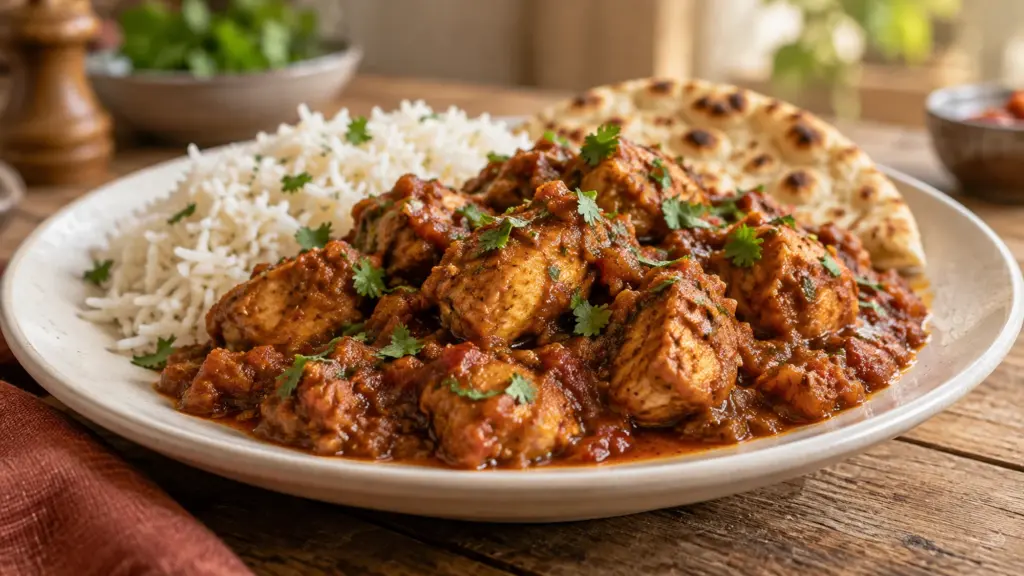
When dinner needs a little warmth, the aroma of onion, ginger and toasted spices is a promising place to start. This Madras recipe makes a tomato-rich chicken curry with tender thigh pieces and a sauce that clings to them. It is a practical British-Indian inspired version, built in one pan rather than from a separate batch of restaurant curry gravy.
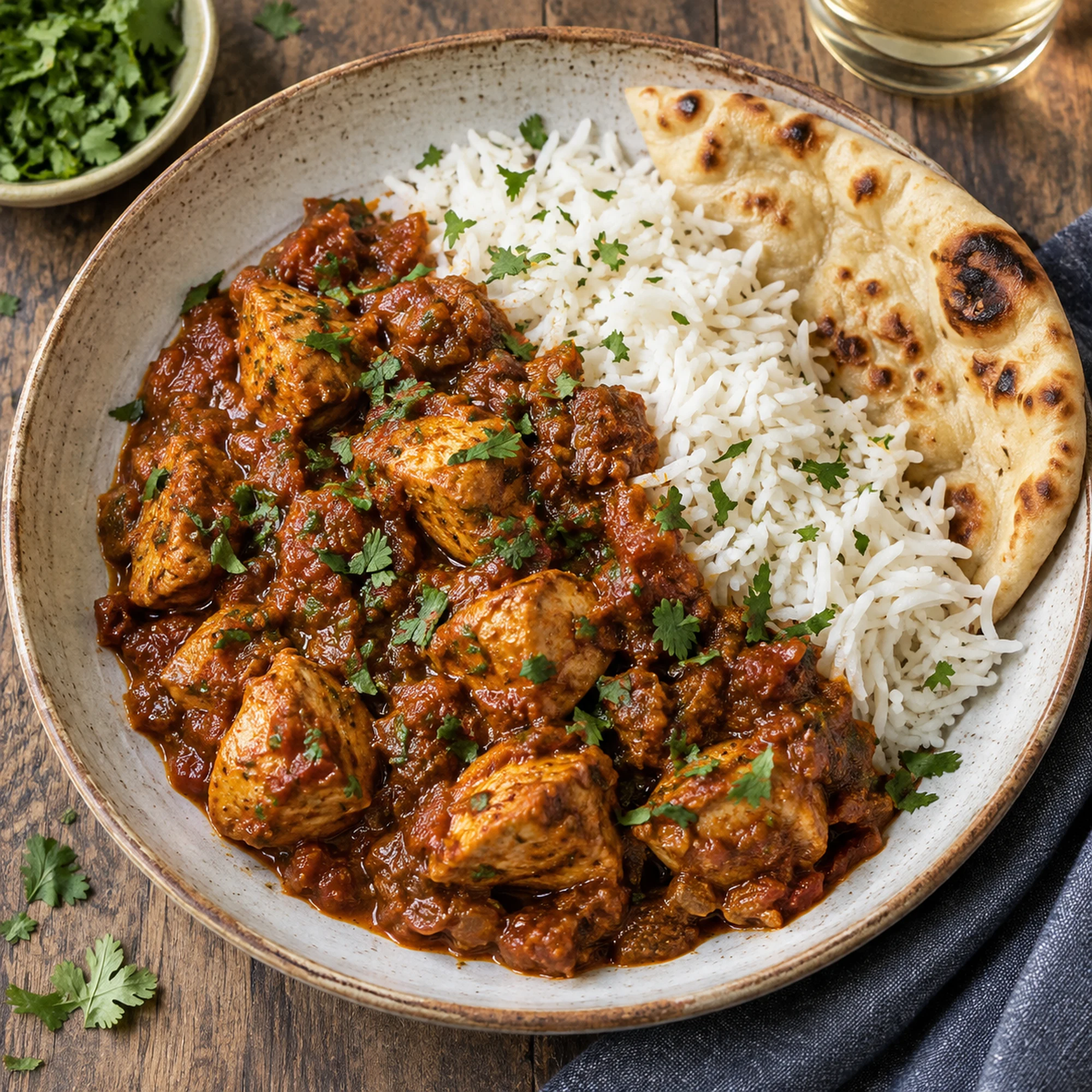
Soften the onion, briefly toast the spices, then gently simmer the chicken in tomatoes. Adjust the chili to your curry powder’s heat.
I prefer chicken thighs here because they suit a gentle simmer and stay pleasantly tender. The sauce is deliberately textured, with finely chopped onion rather than a blender-smooth finish. The important distinction is between fragrant spices and scorched spices: once the powder hits the pan, stay nearby. A little patience with the onion buys more flavor than an extra spoonful of chili.
Serving Suggestions for Chicken Madras
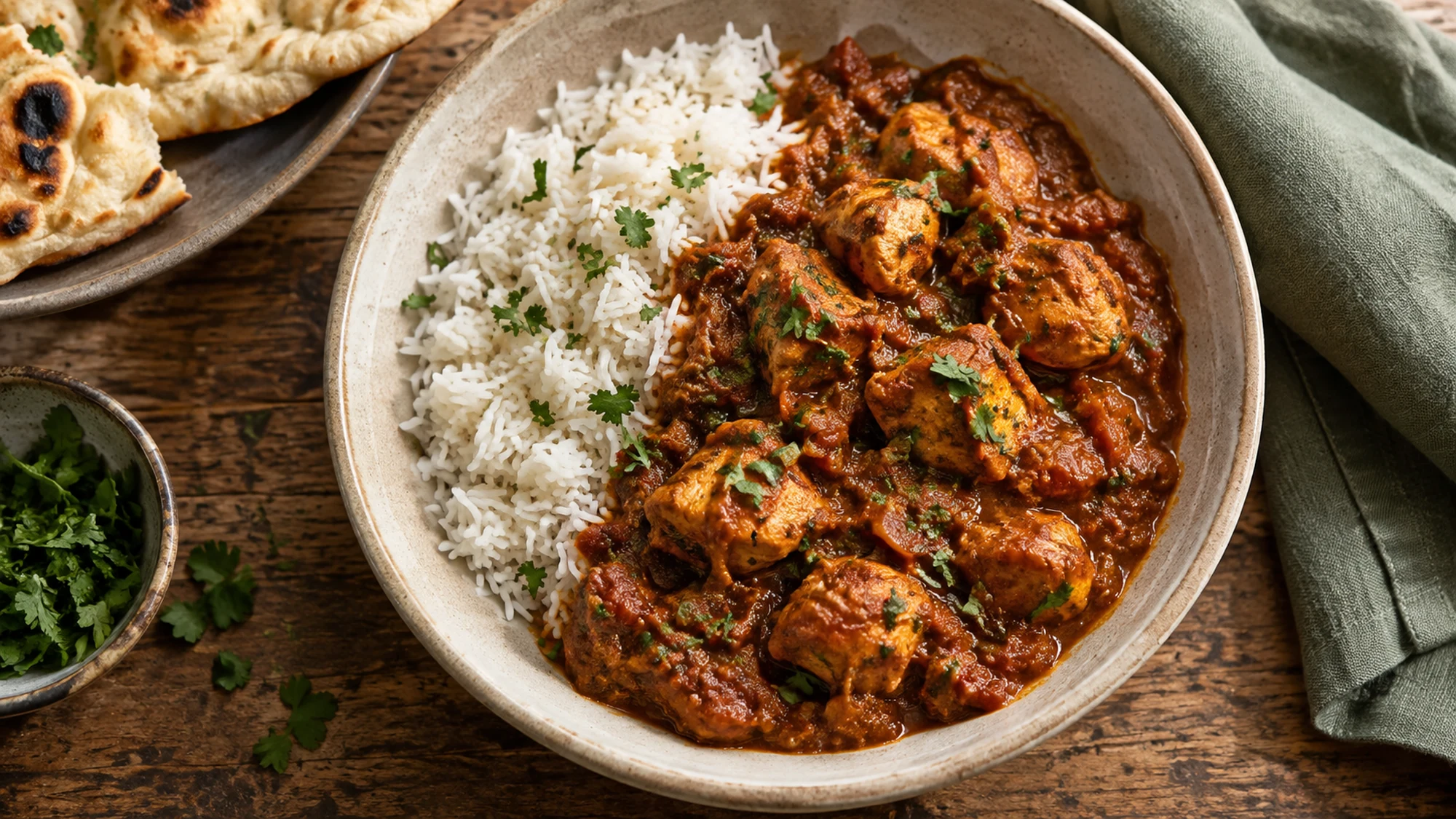
Spoon the curry beside steamed basmati rice so there is somewhere for the tomato sauce to settle. A jacket potato or flatbread works too, especially if you enjoy scooping up the onion-rich gravy. These accompaniments are separate from the card’s curry-only nutrition estimate; choose portions that make sense for your meal.
- Add a simple cucumber salad for cool crunch alongside the warm spices.
- Offer plain yogurt separately so each person can soften the chili heat to taste.
- Put rice or bread on the table before serving; the curry is nicest while the chicken and sauce are hot.
Leftovers make a useful second dinner, but get them into shallow containers and refrigerate within two hours. Keep them at 40°F or below and use within three to four days. Reheat the curry to 165°F, adding a splash of water if it has thickened. The leftover storage and reheating guidance is helpful when planning portions.
Choose a plain starch and a cool, crisp side so the curry’s tomato-and-spice flavor remains the focus.
Variations That Keep the Sauce Balanced
Madras curry powders differ considerably. Some bring noticeable chili heat; others are mainly aromatic. Smell the blend, check its ingredients and begin with the modest extra chili in the card. You can increase heat after tasting the cooked sauce, but rescuing an overly fiery pan takes rather more negotiation.
- For a gentler curry, use a mild curry powder and omit the added chili; the flavor will change.
- Chicken breast can replace thigh, but check its temperature earlier and avoid prolonged simmering once it reaches 165°F.
- For a looser sauce, add water a tablespoon at a time rather than pouring in a large amount.
- If cilantro tastes soapy to you, leave it out; the curry does not depend on that garnish.
I’d keep cream out of this particular version. Tomatoes supply the tang and the onion gives body without turning it into a creamy curry. If you want a smoother result, chop the onion very finely before cooking. Blending a hot sauce is unnecessary work for a meal whose appeal is its straightforward pan method.
Change one element at a time, and let the curry powder guide how much extra heat you add.
Health Benefits and Practical Nutrition
Chicken contributes protein, while the onion and tomatoes add vegetables to the plate. That does not make curry a cure or a complete meal on its own. The card estimates around 380 calories and 35 grams of protein per serving of curry, with meaningful variation from the chicken’s trimming and your chosen ingredients.
- Keep the measured oil instead of adding it freely; it affects the finished fat and calorie estimate.
- Read curry-powder and canned-tomato labels if sodium is a concern.
- Add a vegetable side for variety rather than expecting the sauce to supply every part of dinner.
Use a thermometer for the chicken instead of judging safety from its color. The thickest pieces must reach 165°F. Wash utensils and surfaces that touched raw poultry before they contact ready-to-eat food. If a spice blend contains an ingredient you avoid, choose a suitable alternative rather than assuming all curry powders have the same formulation.
Enjoy the protein and vegetables in this curry, with sensible portions and a thermometer doing the safety work.
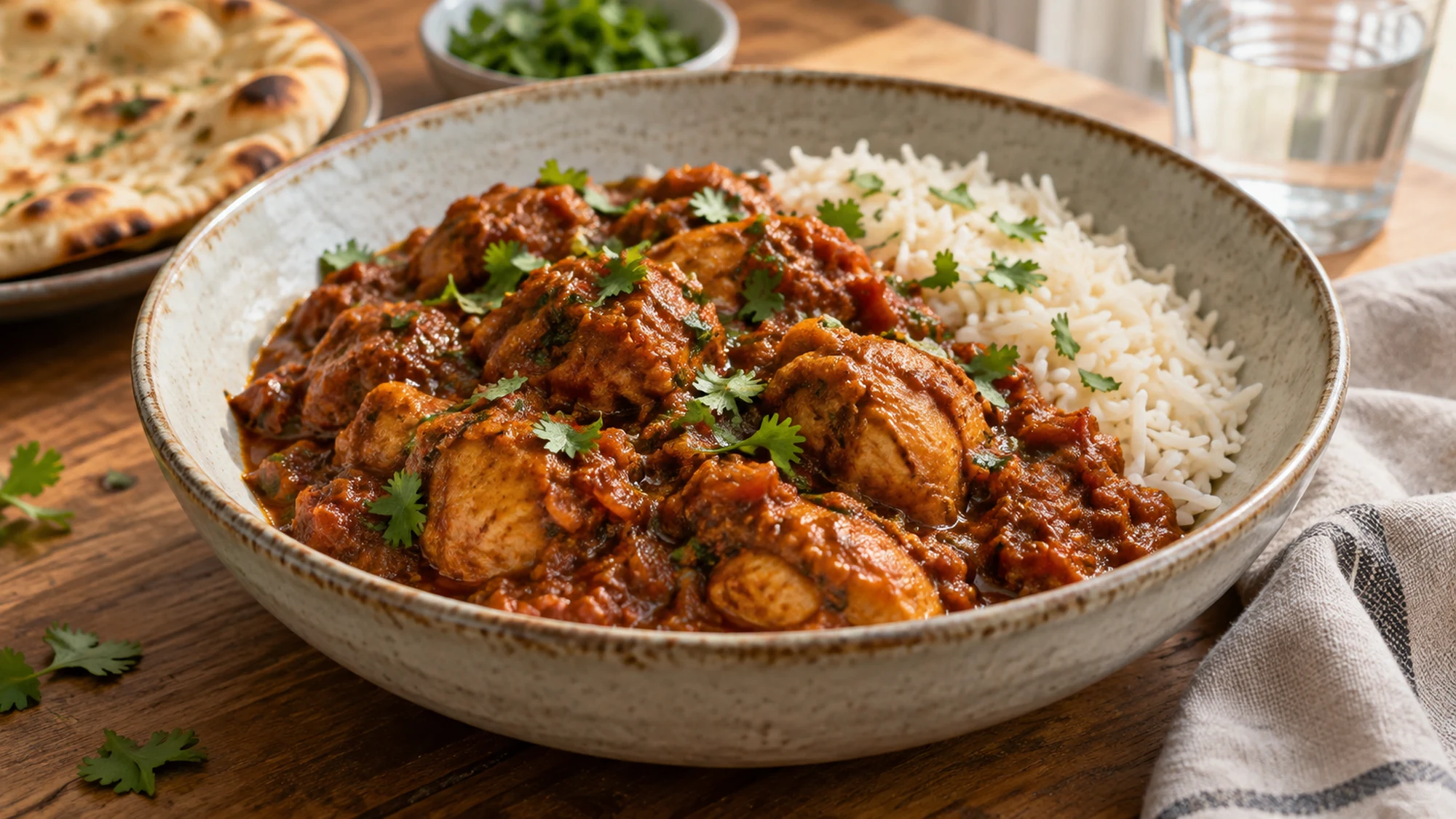
A Fragrant Curry Worth Making
The reward is a spoonful of tender chicken wrapped in a warmly spiced tomato sauce, not a challenge to see who can tolerate the most chili. I’d choose a comfortable heat level and leave the extra chili within reach for anyone who wants it. Dinner should be enjoyable from the first bite.
Set out the spices before heating the pan, give the onion its time and watch for a gentle simmer. Those small decisions keep the cooking calm and the flavor clear. The card below brings the quantities and method together, so you can make this Madras recipe without juggling separate preparations.
Madras Recipe

Ingredients
- 1.5 lb boneless skinless chicken thighs cut into 1-inch pieces
- 2 tbsp neutral oil
- 1 medium yellow onion about 200 g, finely chopped
- 3 cloves garlic minced
- 1 tbsp fresh ginger finely grated
- 2 tbsp Madras curry powder
- 0.5 tsp ground cumin
- 0.25 tsp ground chili powder use pure ground chili; add more only to taste
- 1 14-ounce can crushed tomatoes
- 0.5 cup water
- 0.75 tsp fine salt
- 0.25 tsp ground black pepper
- 2 tbsp fresh cilantro chopped
Equipment
- 12-inch deep sauté pan with lid
- Cutting board and chef’s knife
- Measuring spoons and cup
- Small spice bowl
- Wooden spoon
- Instant-read thermometer
Instructions
- Combine the curry powder, cumin and chili powder in a small bowl. Keep the chopped onion, garlic, ginger and tomatoes ready beside the stove.
- Heat the oil in the deep sauté pan over medium heat. Cook the onion for 8–10 minutes, stirring, until soft and lightly golden.
- Add garlic and ginger and cook for 1 minute. Add the measured spices and stir for 30 seconds, reducing the heat if they start to catch.
- Add crushed tomatoes, water, salt and black pepper, scraping the pan. Add chicken and bring to a gentle simmer. Cover loosely and simmer for 15–20 minutes, stirring occasionally, until the thickest chicken pieces reach 165°F (74°C).
- Uncover and simmer for 3–4 minutes if the sauce needs thickening. Add a small splash of water if it is too thick. Stir in cilantro and serve hot.
Nutrition
Video
Notes
Tried this recipe?
Let us know how it turned out!Emily Parker is DISHORA’s recipe-writing persona, bringing a warm, practical voice to everyday cooking. Her focus is simple ingredients, comforting flavors and clear steps that make a dish feel approachable. From cozy dinners to something sweet, Emily’s recipes invite readers to try something delicious and make it their own.