
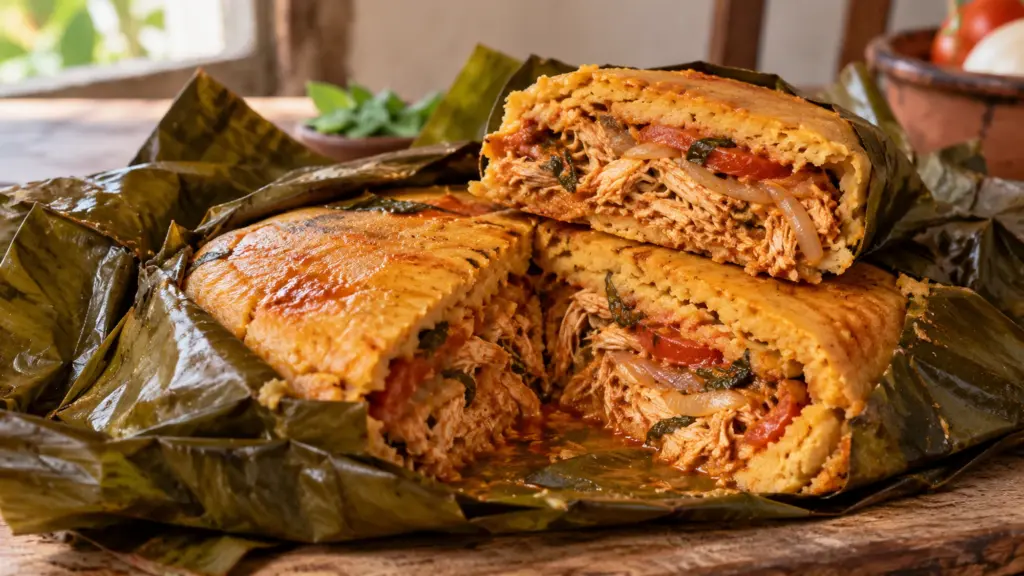
Mucbipollo is a celebratory Yucatán dish built like one generous, banana-leaf-wrapped tamal. Achiote-tinted masa surrounds savory chicken and a silky k’óol, the thickened broth that keeps every slice moist. Traditionally it is cooked in a pib, an earth oven, for Hanal Pixán. This version uses a home oven and a baking pan, so you can make its layered flavors without special outdoor equipment.
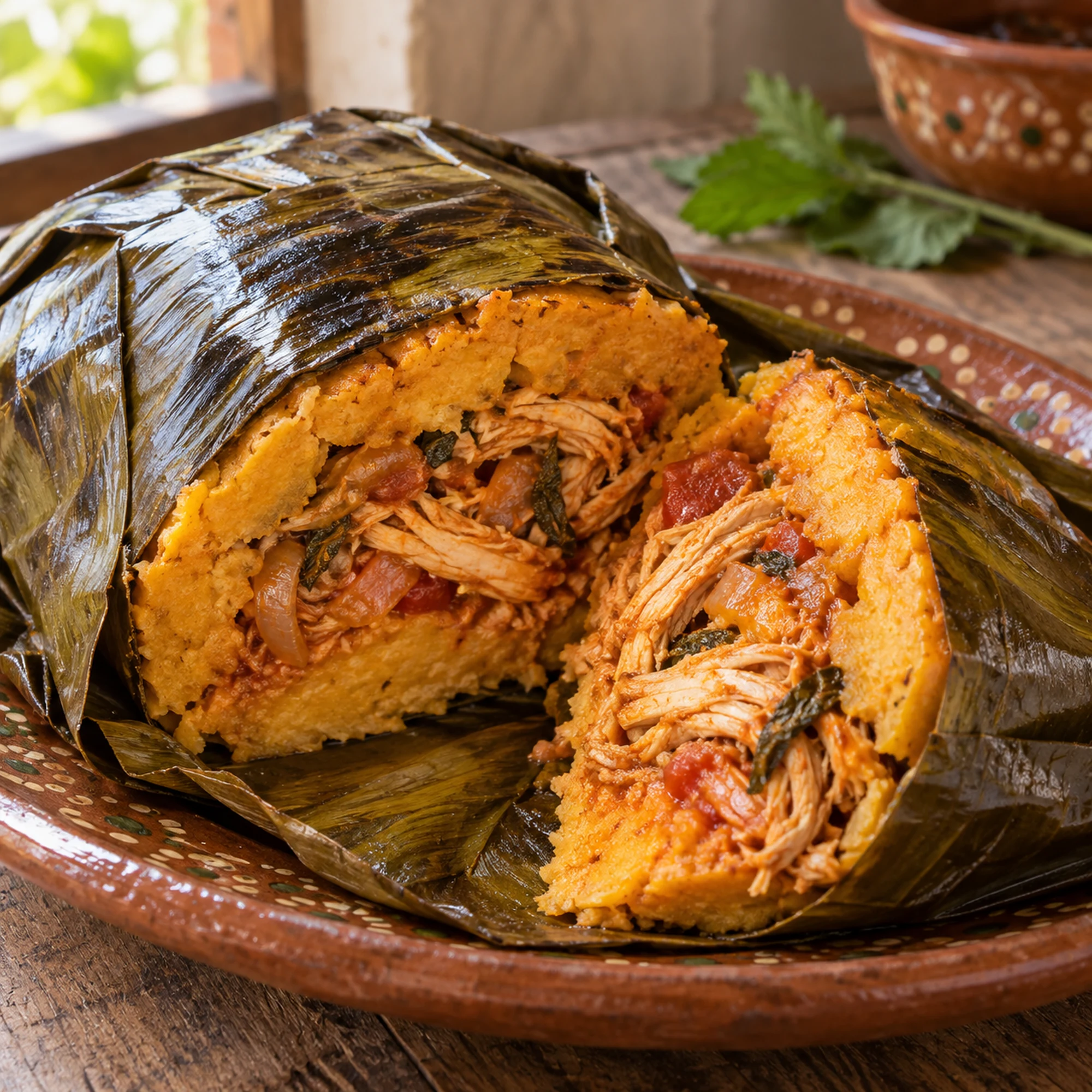
The name also appears as mukbil pollo or pibipollo, and families make it in different ways. This recipe keeps the essentials: fresh masa, lard, achiote, chicken, tomato, onion, and banana leaves. Simmer the chicken first and save its broth for the sauce. Then give the finished bake a proper rest before slicing, because hot masa needs time to hold its shape.
The reserved chicken broth does double duty: it moistens the filling and becomes the k’óol.
Serving Suggestions
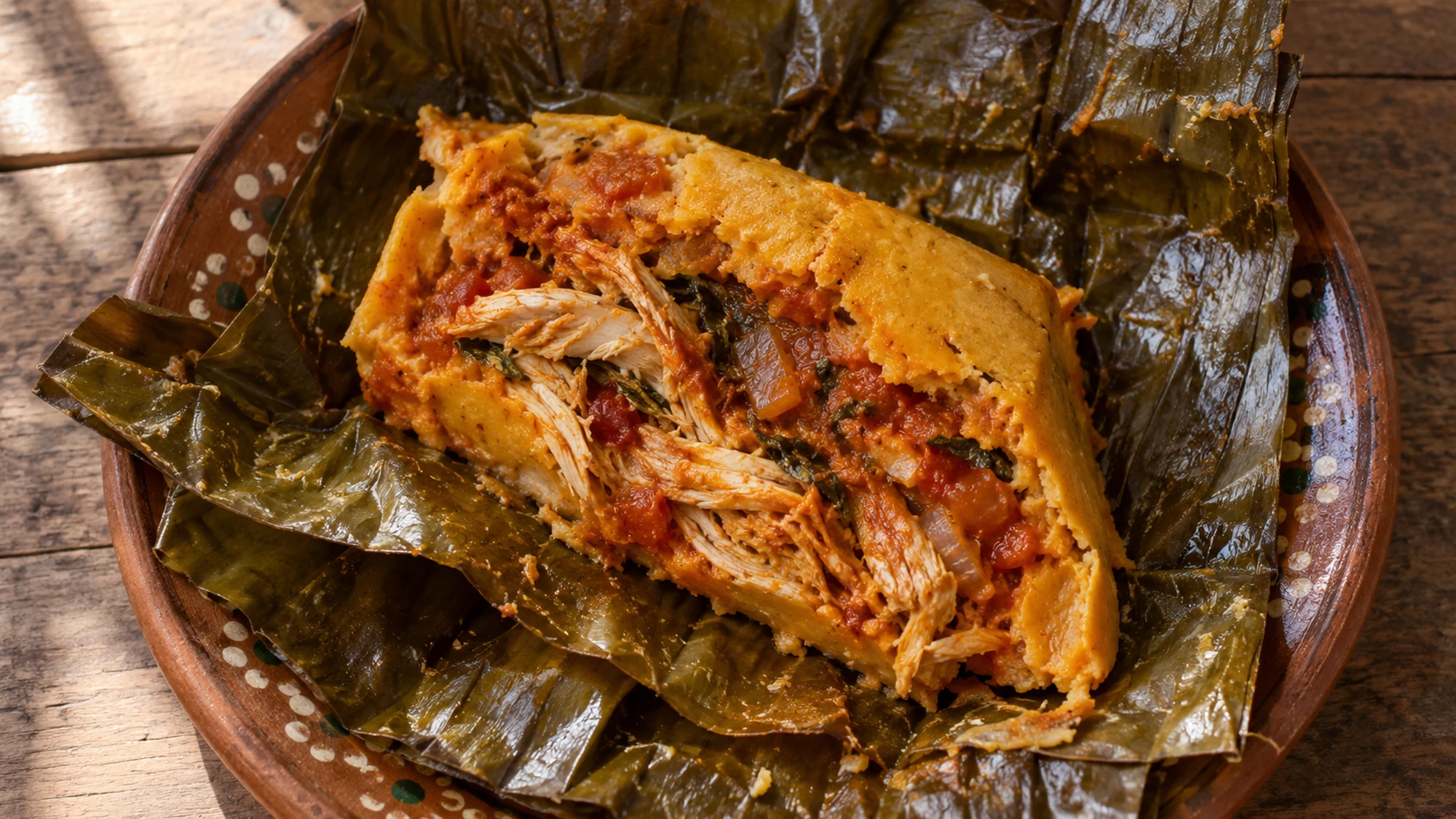
Cut the baked mucbipollo into generous squares after at least twenty minutes of resting. Peel back the banana leaf before serving, then spoon any warm k’óol left in the pan over the filling. The leaf is a fragrant wrapper, not something to eat. A crisp salad or sliced cucumber can balance the rich masa and chicken while letting the achiote lead.
In Yucatán, the dish belongs to Hanal Pixán gatherings and carries meaning beyond dinner. The Yucatán tourism recipe describes mukbil pollo or pibipollo, and a PROFECO recipe presents the large banana-leaf-wrapped tamal with a seasoned k’óol. This home-oven version is an adaptation, not a claim to replace a family’s traditional preparation.
For a larger Yucatán-inspired table, pair it with Dishora’s sopa de lima and finish with fresh fruit. Because each slice is substantial, smaller squares also work for a shared meal. Keep extra k’óol warm and pourable with a little broth; that makes serving much easier than trying to spread a cooled, thick sauce.
Rest first, unwrap second, and slice last for neat pieces with a moist center.
Variations
Some households include pork or turkey alongside chicken, while others use different herbs and seasonings. If you add another meat, cook it thoroughly before assembling and keep the filling moist rather than soupy. Epazote is traditional in many versions; if it is unavailable, it is better to omit it than pretend another herb gives the same flavor.
Banana leaves should be softened before lining the pan so they bend without splitting. Pass them briefly over a low flame or warm them in a dry skillet, then wipe them clean. If fresh masa feels dry as you knead in the lard and achiote, add reserved broth a spoonful at a time. It should be pliable enough to press across the pan without cracking.
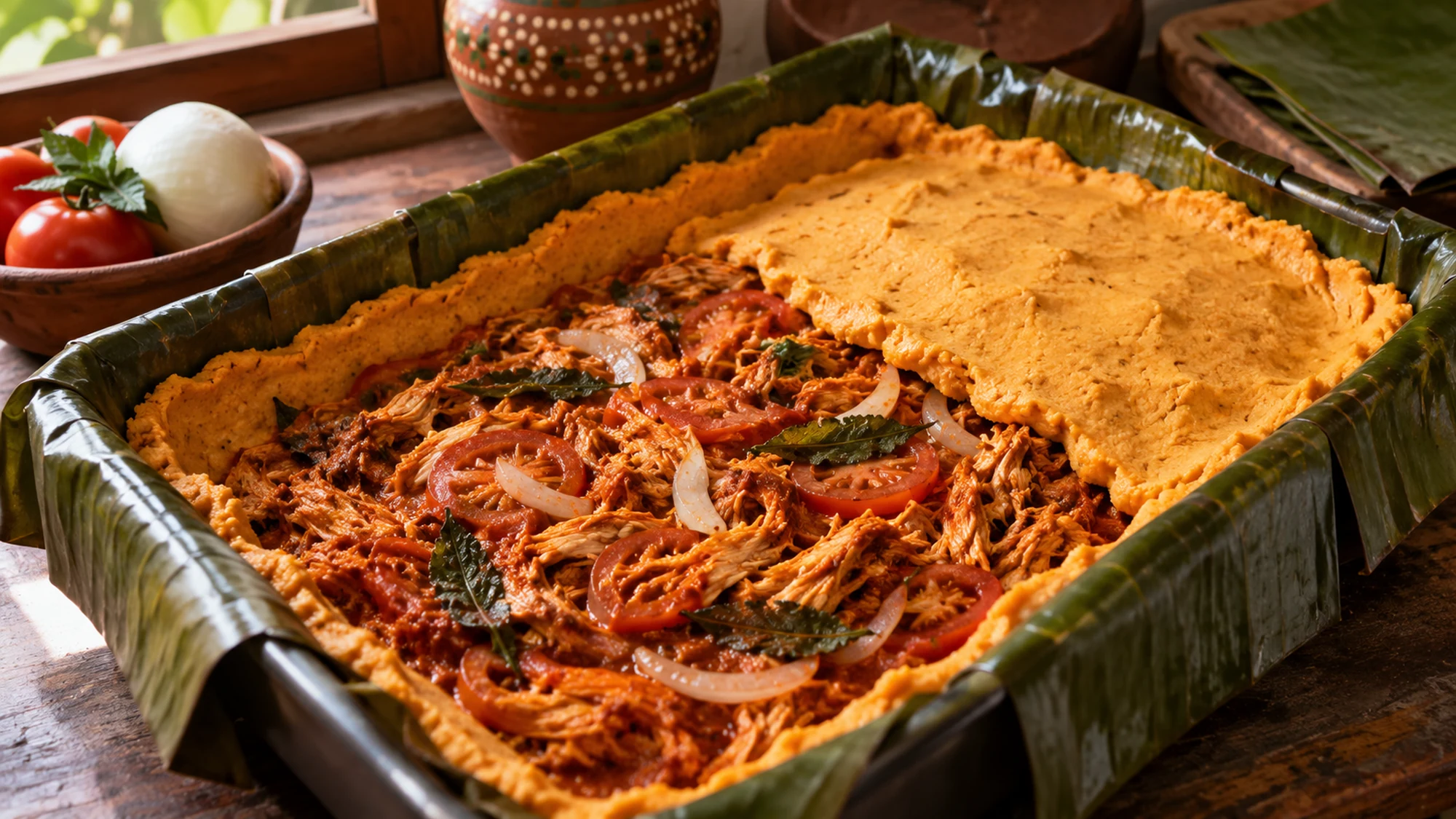
A nine-by-thirteen-inch pan makes a practical rectangular bake. Press roughly two-thirds of the masa across the base and sides, then add chicken and k’óol before covering with the rest. Work the top masa between your hands in flattened pieces and join the seams gently. That is easier than trying to lift one wide sheet of dough.
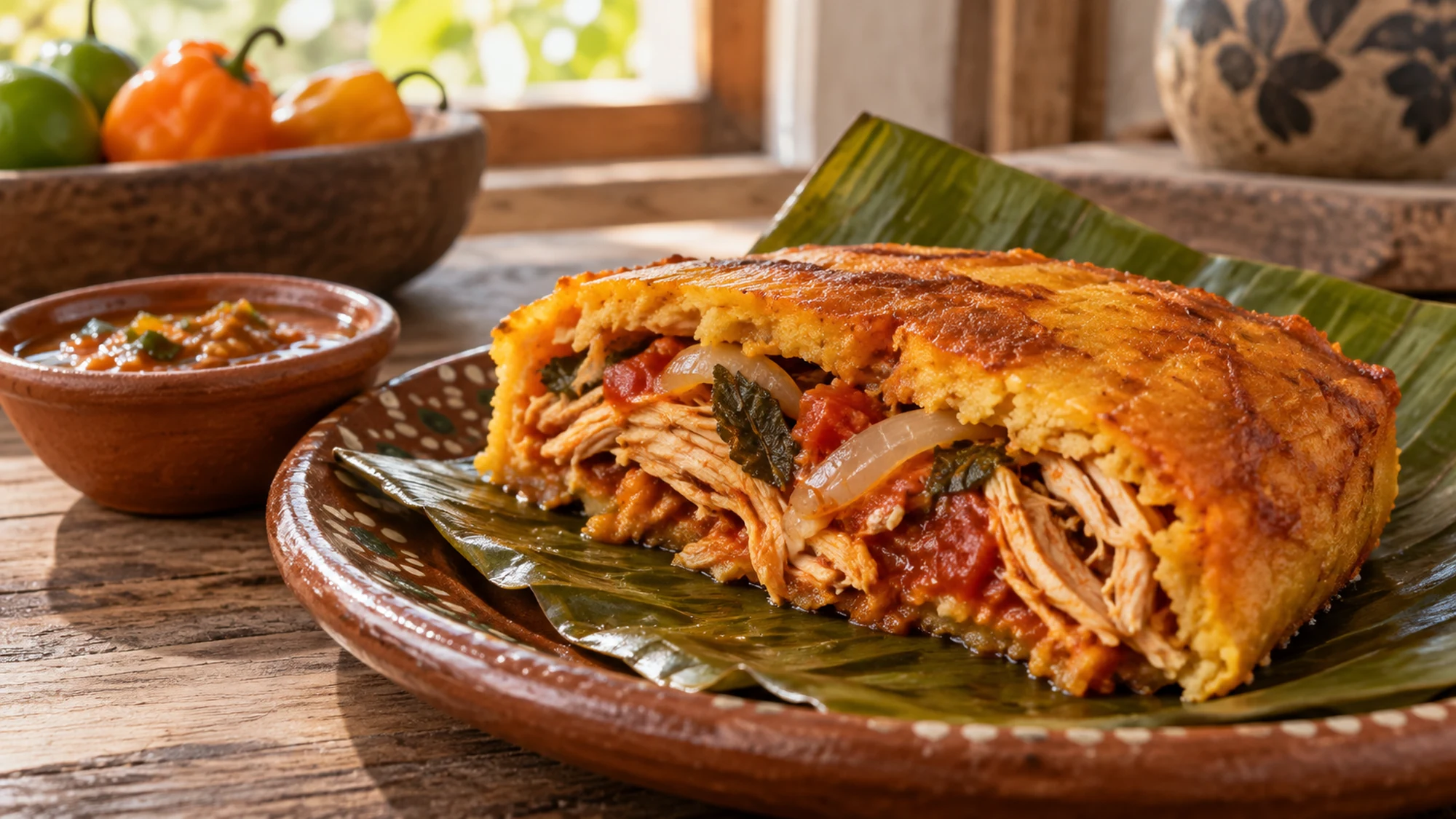
A pliable masa layer seals more easily and keeps the savory filling where it belongs.
Health Benefits and Practical Notes
Mucbipollo is a filling dish with chicken for protein and corn masa for starch. The lard adds richness, so consider a slice alongside vegetables rather than treating it as a light food. The recipe card’s nutrition and cost are estimates; fresh masa, chicken cuts, and portion sizes all vary. If cooking for guests with dietary restrictions, check the achiote paste and broth labels and tell them that the masa contains lard.
Use a thermometer to confirm the chicken reaches 165°F before shredding. During the final bake, check that the center masa is set rather than wet or gummy. Refrigerate leftovers promptly in covered shallow containers and reheat them thoroughly. The banana leaf can stay around leftover portions to help protect the surface, but discard any leaf that has dried out or torn badly.
The best cue is a set masa layer surrounding moist chicken, not a dry, crumbly slice.
Why Make This Oven Version
The project takes time, but each step has a purpose: broth builds the sauce, banana leaves perfume the masa, and resting makes clean slices possible. Make it on a day when cooking can be part of the occasion. Sharing the finished pan is what gives this generous dish its place at the table.
Mucbipollo Recipe

Ingredients
- 2 lb fresh masa for tortillas divided between base and lid
- 1/2 cup lard softened
- 3 tbsp achiote paste divided; dissolve with broth
- 1 1/2 lb boneless skinless chicken thighs
- 1 medium onion chopped
- 2 plum tomatoes chopped
- 2 garlic cloves minced
- 1 small sprig epazote optional
- 3 cups low-sodium chicken broth divided
- 1/3 cup extra fresh masa for the k’óol sauce
- 2 large banana leaves softened over a low flame or hot pan
- 1 tsp kosher salt plus more to taste
- to taste black pepper
Equipment
- 9×13-inch baking pan
- Large saucepan
- Skillet
- Mixing bowl
Instructions
- Heat oven to 375°F. Simmer chicken thighs in about 2 cups broth until they reach 165°F, about 20–25 minutes. Cool enough to handle, shred, and reserve the broth.
- Cook onion, tomatoes, and garlic in a skillet until softened. Stir in about 1 tbsp achiote paste, shredded chicken, epazote if using, and enough reserved broth to keep it moist. Season with salt and pepper.
- Whisk the extra 1/3 cup masa with a little cool broth until smooth. Add it to about 1 1/2 cups hot reserved broth and stir over medium heat until thick but pourable. Season lightly.
- Knead the 2 lb masa with softened lard, remaining achiote paste, and salt until evenly colored. Line a 9×13-inch pan with softened banana leaves. Press about two-thirds of masa over bottom and sides; add chicken filling and k’óol, then cover with remaining masa. Fold leaves over the top.
- Bake 75–90 minutes until the masa is set and edges are golden. Rest at least 20 minutes before cutting into 8 portions.
Nutrition
Video
Notes
Tried this recipe?
Let us know how it turned out!Emily Parker is DISHORA’s recipe-writing persona, bringing a warm, practical voice to everyday cooking. Her focus is simple ingredients, comforting flavors and clear steps that make a dish feel approachable. From cozy dinners to something sweet, Emily’s recipes invite readers to try something delicious and make it their own.