
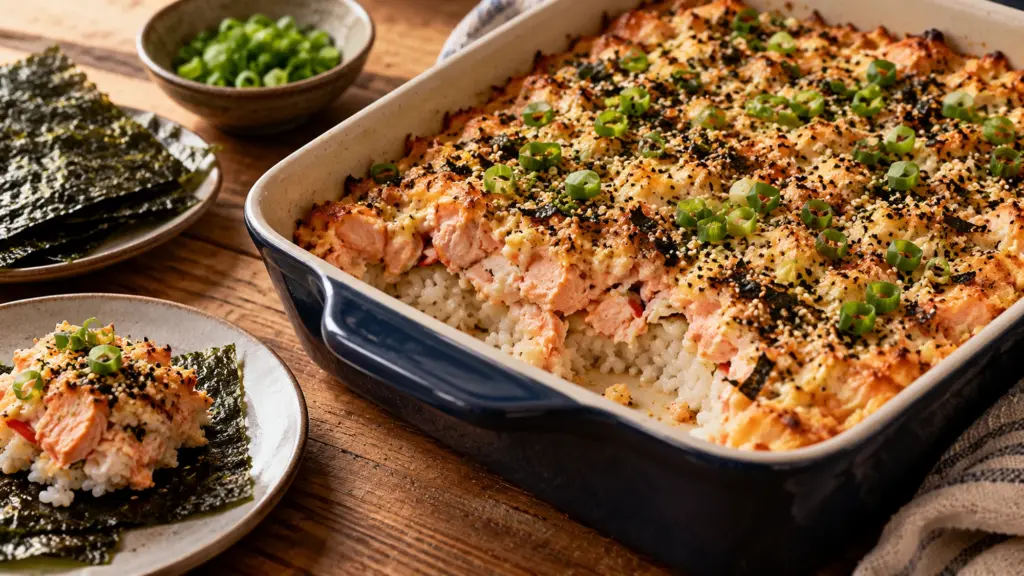
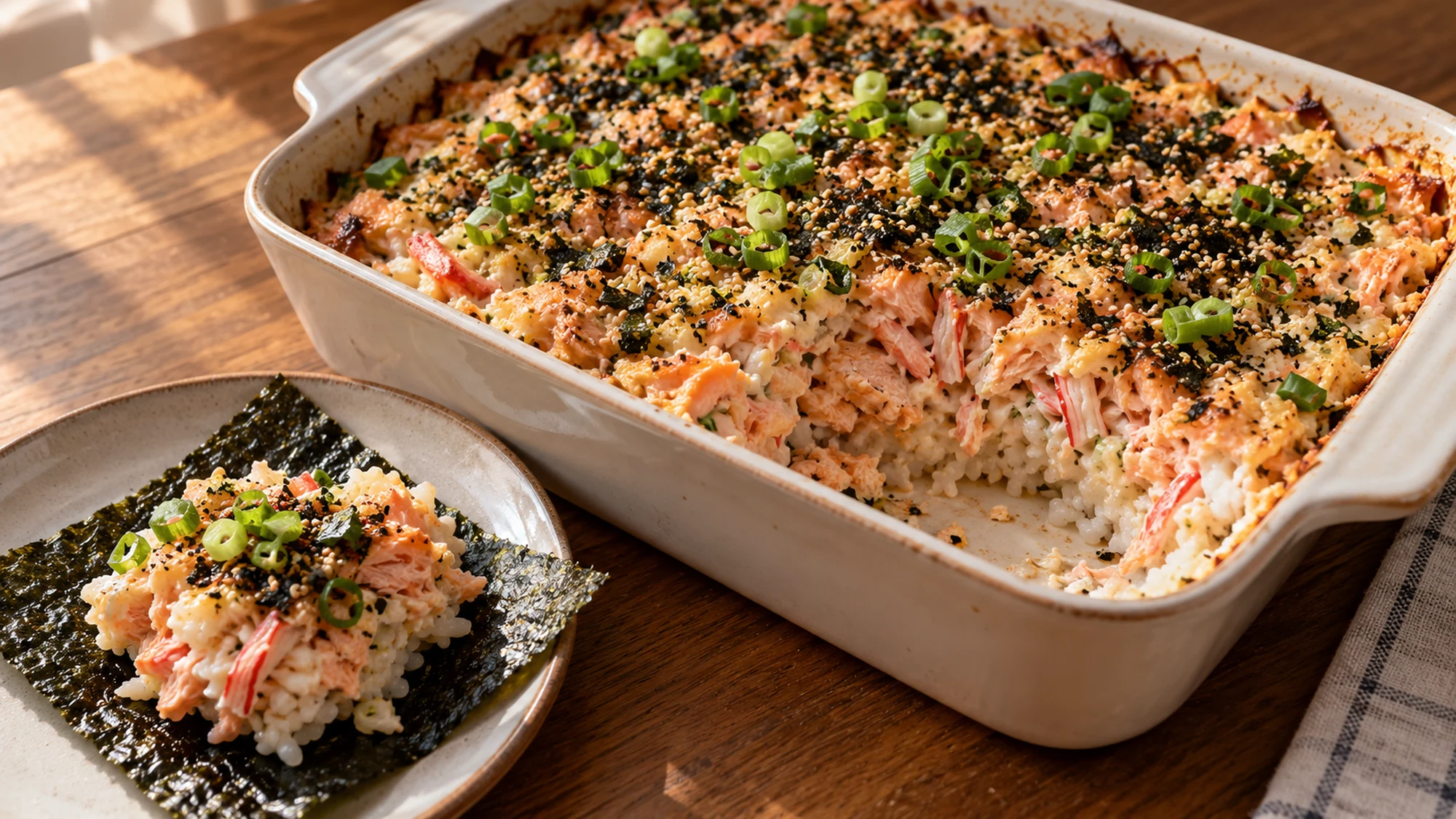
Salmon sushi bake turns rice, cooked fish and seaweed into a meal people can scoop and share. A layer of seasoned short-grain rice supports a creamy salmon-and-crab topping, then the dish goes into the oven until hot throughout. Nori squares wait alongside for wrapping each bite. The rice is tender, the topping savory, and the seaweed gives a crisp contrast.
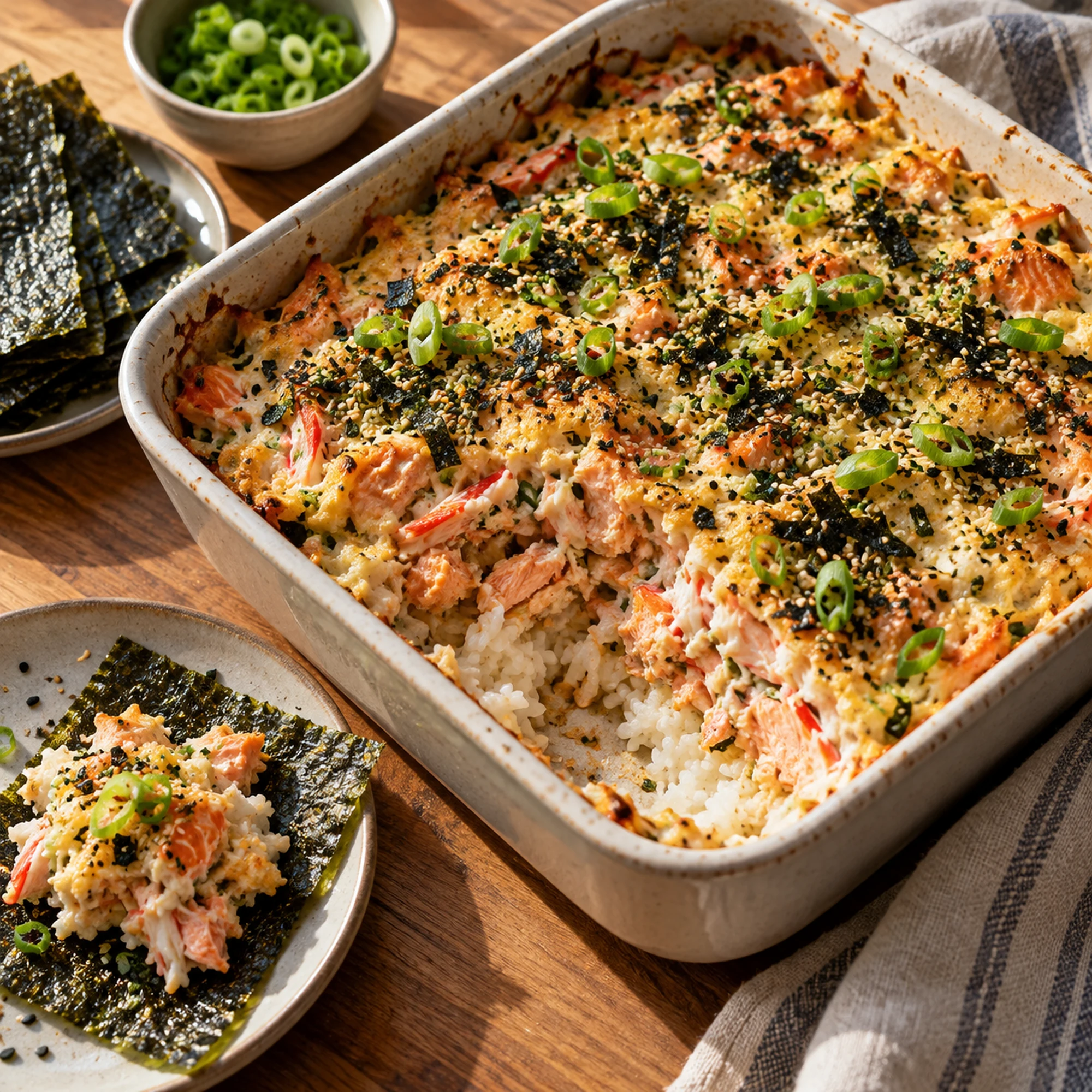
Cook the salmon first, season the rice gently and check the finished casserole’s center before serving.
I prefer cooking the salmon separately before flaking it into the topping. That makes its doneness easier to check and keeps larger pieces visible in the finished dish. The rice also deserves attention: rinse it, use the package’s water amount and fold in the vinegar seasoning gently. Stirring too aggressively can turn the grains pasty before the casserole is even assembled.
Japanese mayonnaise, a small amount of cream cheese and optional sriracha bind the fish without needing a heavy layer of sauce. Furikake adds seasoning between the rice and topping, with another light sprinkle at the end. Check its label because mixtures vary. Some include sesame and bonito, while others use different seaweed or seasonings, so their saltiness and allergen lists are not identical.
Serving suggestions for salmon sushi bake
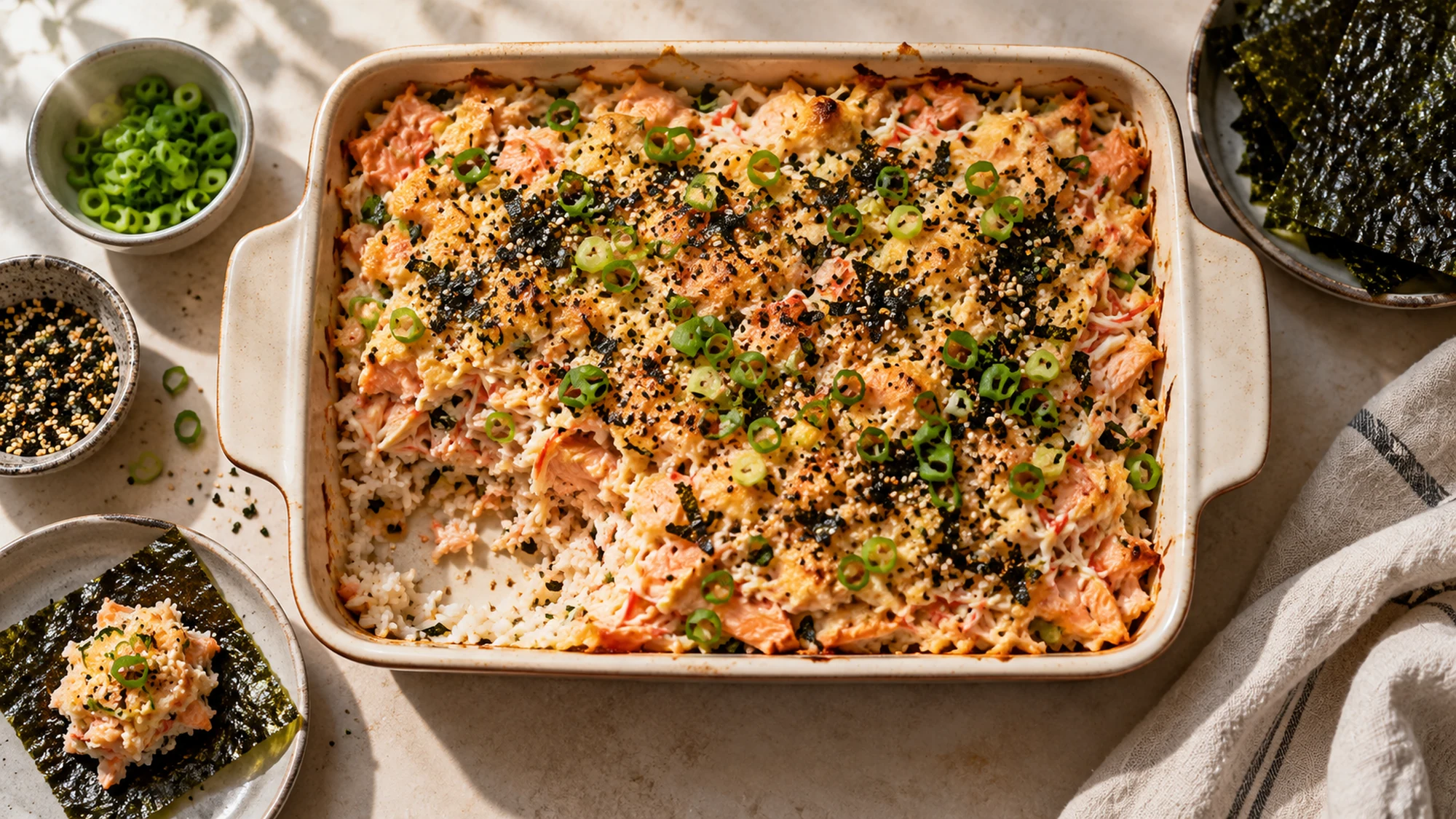
Put the warm baking dish in the center of the table with nori squares, cucumber slices and any extra scallions alongside. Let people scoop a small portion into the seaweed just before eating so it stays crisp. The casserole makes six servings. I would keep additional mayonnaise or sriracha on the side instead of drenching the whole top before anyone tastes it.
A crisp salad or a few plain vegetables help balance the creamy topping and seasoned rice. If you want a cool starter, Dishora’s vichyssoise can be served in small cups. For the bake itself, cut the nori into manageable squares and set out spoons.
Scoop into nori just before each bite so the seaweed stays crisp.
Variations
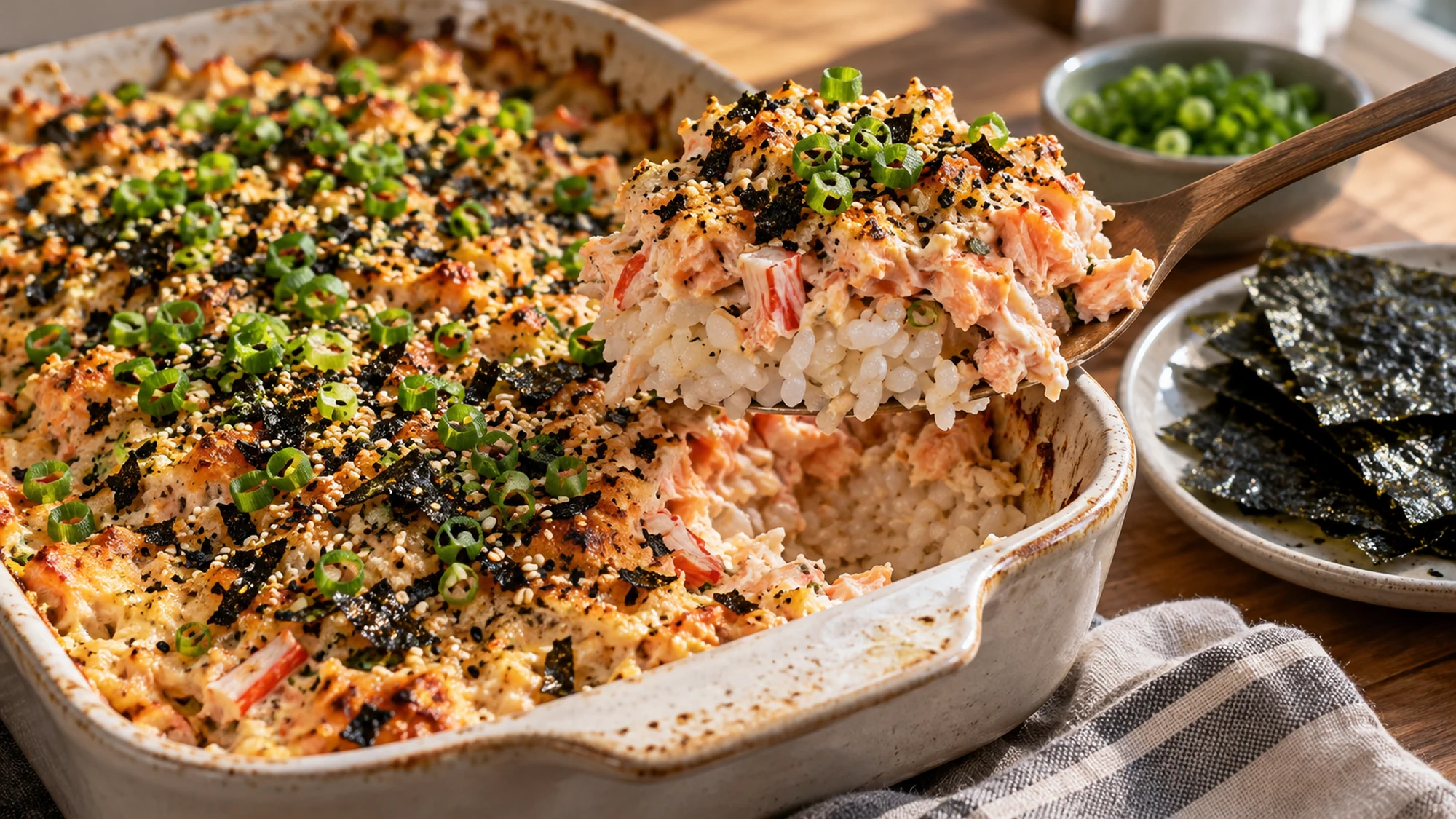
The card uses imitation crab, but you can make a salmon-only variation by replacing it with additional cooked salmon. That changes the yield and nutrition, so keep it clearly separate from the base recipe. Some imitation crab contains wheat or egg as well as fish. Check the package before deciding it suits a particular dietary need, even when its name sounds straightforward.
Sriracha is optional, which makes the heat easy to adjust for the table. Start with a modest amount and offer more for people who want it. A little cream cheese adds body, while the mayonnaise keeps the flakes moist. I would avoid increasing both heavily; too much binder can hide the salmon’s texture and make the top feel more like a sauce than a fish layer.
- Short-grain sushi rice has the texture needed to hold a scoop together.
- Other rice varieties give a different result and may fall apart more readily in the nori.
- If using a rice cooker, follow its model’s directions and measure grain and water consistently.
- The rice cooker guide explains why different grains and appliance programs need their own water amounts.
Use enough creamy binder to hold the fish together while keeping the salmon flakes visible.
Health benefits
Salmon provides protein and fat, and rice supplies much of the dish’s carbohydrate. Mayonnaise and cream cheese add richness, so the estimated serving is a substantial main rather than a small snack. Serve vegetables alongside for crunch and variety. The nutrition estimate depends on the salmon type and mayonnaise brand; leaner fish and a different binder can noticeably change the total.
Cook the salmon to 145°F at its thickest part before flaking it. Then check that the center of the finished casserole reaches 165°F, especially after handling and assembling its cooked ingredients. The safe temperature chart lists both fish and casserole targets. Oven timing is useful guidance, but a thermometer tells you what is happening in the actual dish.
- Fish, egg, milk, soy, sesame and wheat can appear among these ingredients, depending on the products chosen.
- Keep that label check visible when serving guests.
- Refrigerate leftovers promptly in shallow containers and reheat thoroughly.
- Rice and cooked fish need careful cooling too; the dish should not sit on the counter through a long evening simply because it is easy to keep scooping.
Check both fish and casserole temperatures, and read packaged toppings carefully for allergens.
Bring the dish and nori to the table
Cook the rice and salmon, season each well and assemble a modest layer of topping over the grains. Once the center is hot, add scallions and bring the nori to the table. The appeal is in the combination of tender rice, creamy fish and a crisp wrapper. Keep those parts distinct, and every small scoop feels like a complete bite.
Salmon Sushi Bake Recipe

Ingredients
- 2 cups short-grain sushi rice uncooked
- 2 1/4 cups water or package amount
- 3 tablespoons rice vinegar
- 1 tablespoon sugar
- 1/2 teaspoon fine salt
- 1 pound skinless salmon fillet
- 1 cup imitation crab flaked
- 1/3 cup Japanese mayonnaise
- 2 tablespoons cream cheese softened
- 1 tablespoon sriracha optional
- 2 tablespoons furikake seasoning check package for fish, sesame and soy
- 2 scallions thinly sliced
- 6 sheets nori cut into squares
Equipment
- 2-quart baking dish
- Rice cooker or saucepan
- Instant-read thermometer
- Mixing bowls
Instructions
- Rinse rice in several changes of cool water until it looks less cloudy. Cook with measured water in a rice cooker or saucepan. Stir vinegar, sugar and salt until dissolved, then gently fold into hot rice.
- Heat oven to 400°F. Place salmon on a lined pan and bake until it reaches 145°F at the thickest part and flakes easily, usually 12 to 15 minutes depending on thickness. Cool briefly, then flake.
- Stir imitation crab, mayonnaise, cream cheese and optional sriracha together. Fold in flaked salmon without mashing it. Taste and adjust heat if desired.
- Press seasoned rice into a lightly oiled 2-quart dish and sprinkle with furikake. Spread salmon mixture evenly over the top. Bake at 400°F for 10 to 12 minutes, until hot throughout. Check the center reaches 165°F before serving.
- Finish with scallions and another sprinkle of furikake. Serve warm with nori squares so each person can scoop a bite into seaweed.
Nutrition
Video
Notes
Tried this recipe?
Let us know how it turned out!Emily Parker is DISHORA’s recipe-writing persona, bringing a warm, practical voice to everyday cooking. Her focus is simple ingredients, comforting flavors and clear steps that make a dish feel approachable. From cozy dinners to something sweet, Emily’s recipes invite readers to try something delicious and make it their own.