
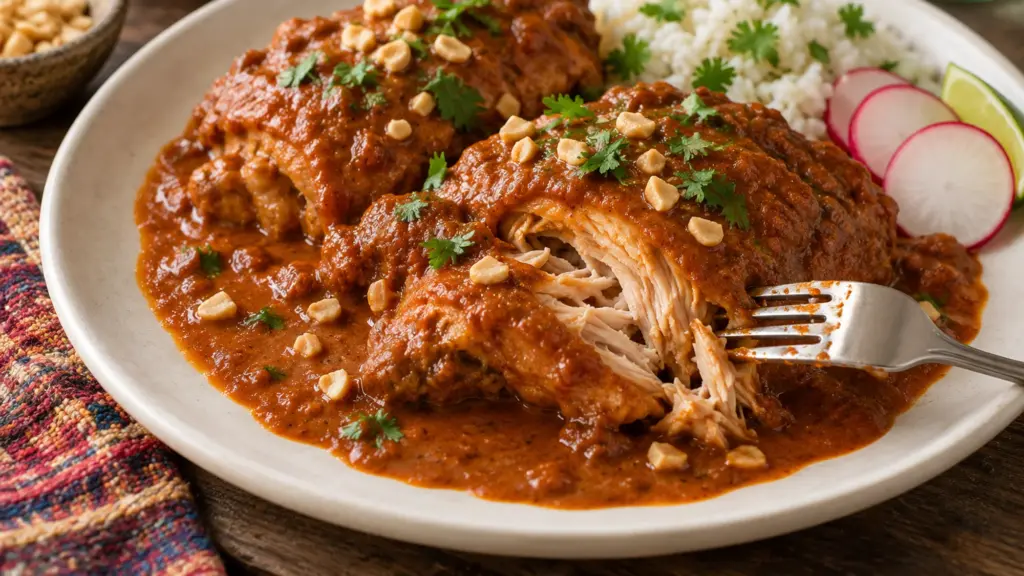
The first spoonful of pollo encacahuatado should taste of roasted peanuts and softened dried chiles, with chicken held in a sauce that actually coats it. Toast the chiles briefly, soften them, blend the sauce smooth, then simmer the chicken until the flavors settle together. The result is nutty, gently spiced, and ready for a plate of rice.
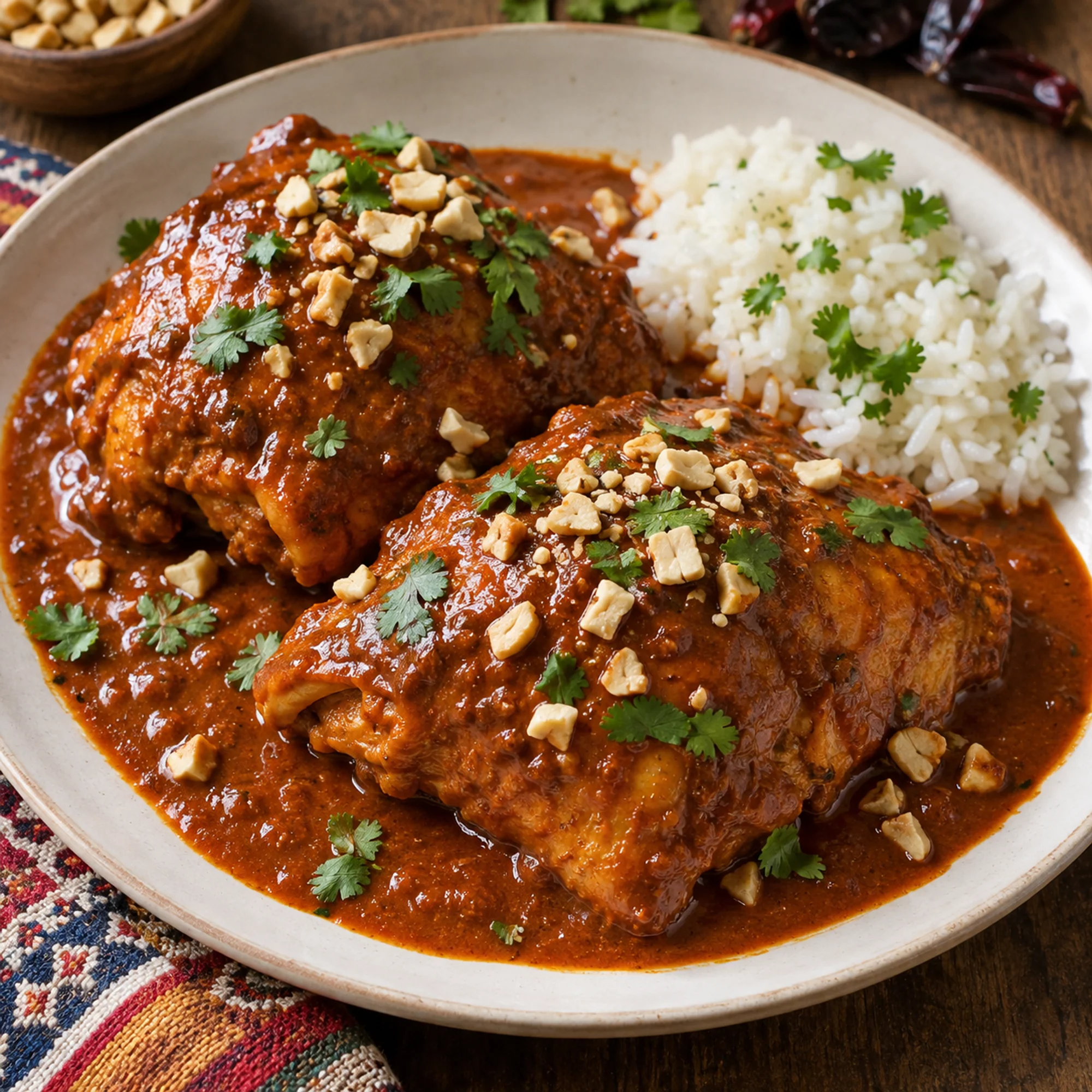
This pollo encacahuatado uses roasted peanuts, ancho and guajillo chiles, tomatoes, onion, garlic, and broth for a brick-red sauce. Brown chicken thighs first, then simmer them in the sauce until they reach 165°F (74°C).
Ancho brings mellow depth; guajillo adds brightness. Remove stems and most seeds before soaking, and toast chiles only until fragrant; dark, scorched patches can make the sauce bitter. The peanuts thicken the blend naturally, so there is no need to stir in cream.
I prefer to blend the sauce thoroughly before it meets the chicken. A smooth base coats the pieces evenly, while a few chopped peanuts on top add crunch at the table. Taste for salt only after the sauce has simmered because broth and reduced volume can change the balance.
Serving suggestions
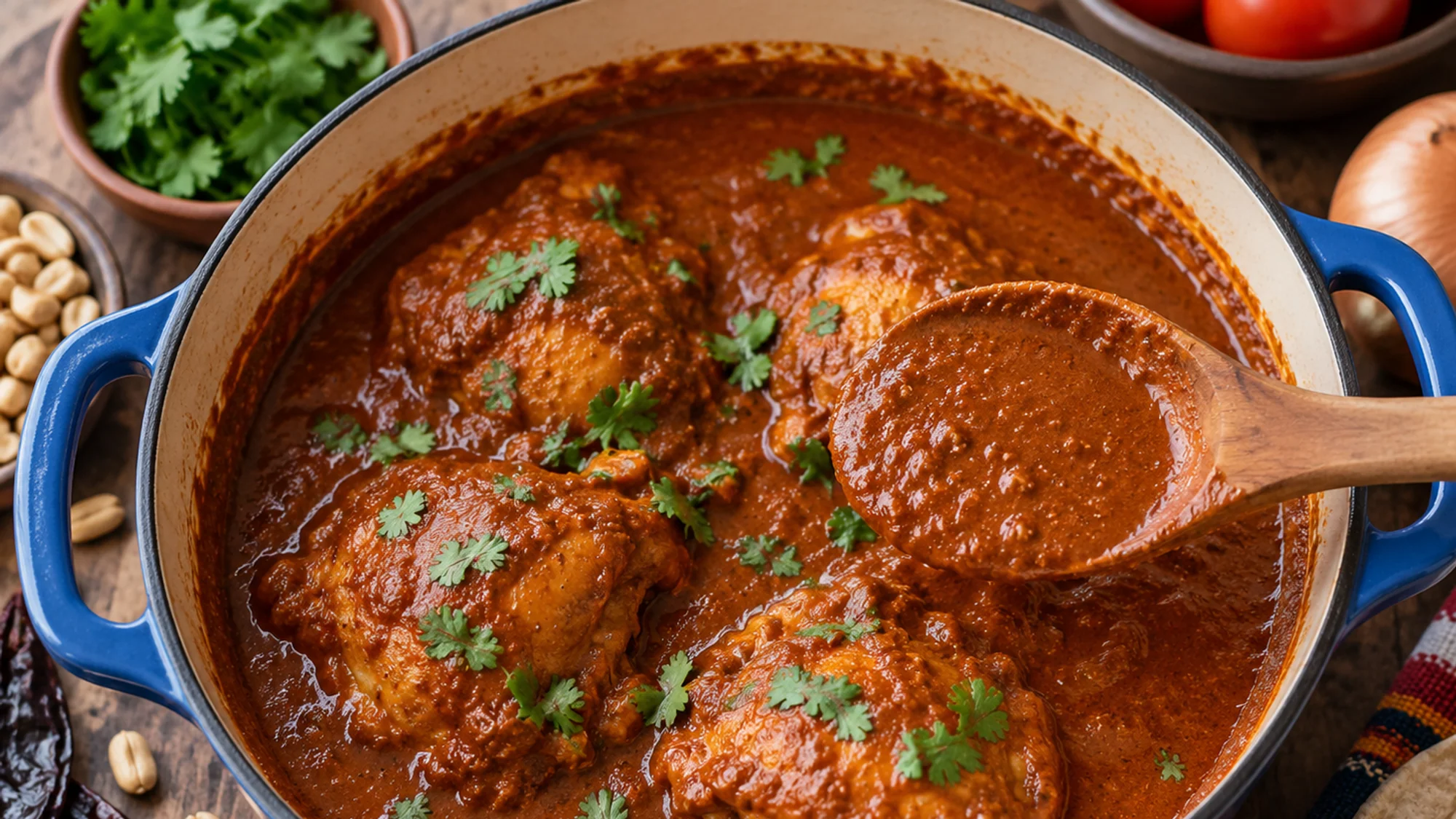
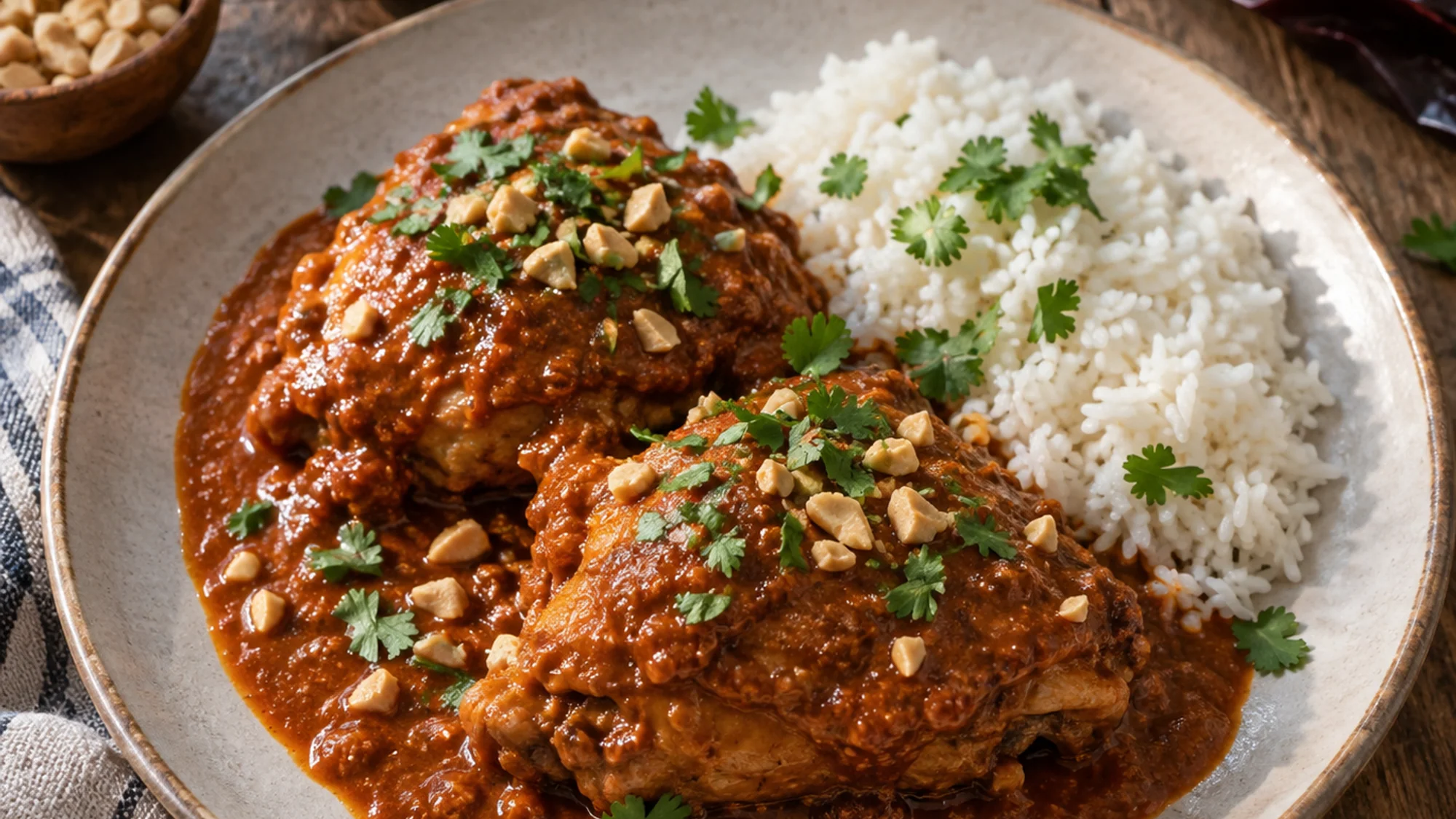
Spoon chicken and plenty of sauce over plain rice, which gives each bite somewhere to land. Warm corn tortillas are another good choice for gathering the sauce. Sliced radishes and a lime wedge add crispness and brightness, especially if you like a contrast to the roasted peanut flavor.
For a simpler plate, add sautéed greens or roasted zucchini and let the sauce touch both. Keep the garnish modest: cilantro and a few chopped peanuts are enough. I would avoid another heavy, sweet sauce alongside this one; the encacahuatado deserves room to speak.
Transfer the chicken to a warm shallow dish. Spoon sauce over the top just before serving. Let guests choose their lime because a squeeze changes the chile and peanut balance noticeably.
Rice or warm tortillas catch the sauce; radish, cilantro, and optional lime bring a fresh contrast without covering the main flavor.
Variations
If you prefer less heat, shake out the seeds carefully and keep to the ancho and guajillo combination. For a stronger chile note, add a small piece of another dried chile, then taste rather than assuming every batch has the same heat. Dried chiles vary.
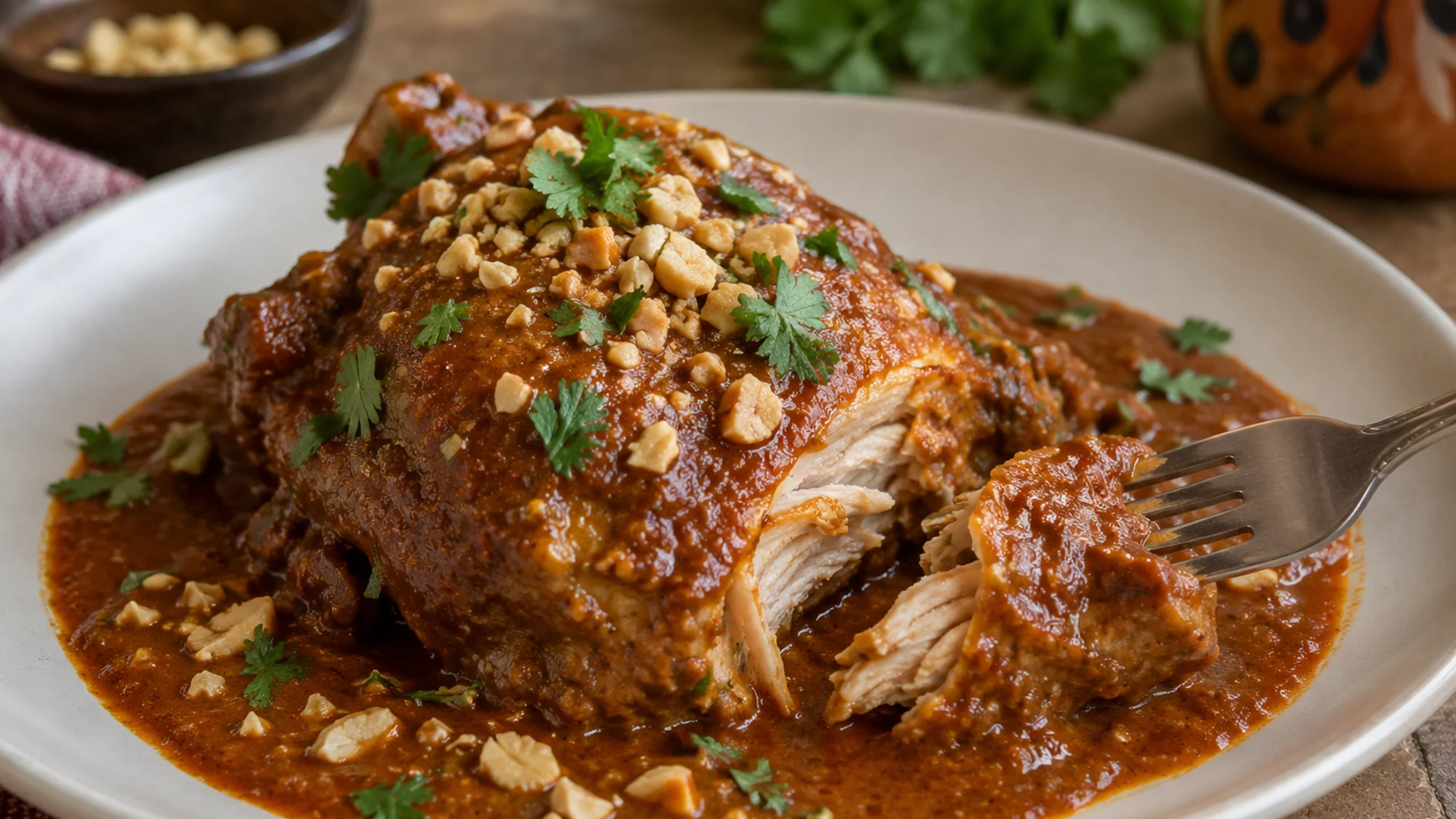
You can make the sauce thinner with a splash of broth while it simmers, or reduce it uncovered for a thicker coating. Add liquid a little at a time; peanuts continue to absorb and give body. A squeeze of lime belongs at the end, not in the blender, so you can decide whether the finished sauce actually needs it.
Chicken breast can replace thighs, but it cooks faster and can dry out in a long simmer. Cut it into even pieces and check the center with a thermometer. Whatever the cut, poultry needs to reach 165°F (74°C). A peanut allergy makes this particular sauce unsuitable; swapping the peanuts changes the dish rather than making a dependable equivalent.
Adjust the sauce’s thickness with broth and manage heat through your chile choice; keep the peanuts as the defining flavor.
Health benefits
Chicken supplies protein, and peanuts add unsaturated fats along with some protein of their own. Portion the rich sauce deliberately. Rice, tortillas, or vegetables will change the overall balance of the plate.
The card’s nutrition figures estimate the chicken and sauce, not optional rice, radishes, or tortillas. Broth sodium and the edible yield of bone-in thighs vary, so use those numbers as a guide. If you are watching sodium, start with unsalted broth and season the finished sauce in small steps.
The practical safety step is simple: measure the thickest part of each thigh without touching bone, and continue cooking until it reads 165°F (74°C). Refrigerate leftovers promptly and reheat until hot throughout. Keep peanuts and peanut-contact utensils away from anyone with an allergy.
Chicken and peanuts make a substantial meal; serving size, sides, sodium, and safe handling matter more than a broad health label.
Let the sauce do its work
Near the end of cooking, the sauce should cling to a spoon and leave a slow trail when stirred. If it looks too tight, add a little broth and give it another minute. If it looks thin, leave the lid off and let it bubble gently. Those small adjustments matter more than last-minute spices.
This is a dish I would bring to the table with the rice ready and the lime wedges nearby. It offers a warm, nutty sauce with enough chile character to stay interesting, and the last spoonful is worth saving for the plate.
Pollo Encacahuatado Recipe
Pollo Encacahuatado Recipe

Ingredients
- 2 lb bone-in skinless chicken thighs about four pieces
- 2 dried ancho chiles stems and seeds removed
- 2 dried guajillo chiles stems and seeds removed
- 3/4 cup unsalted roasted peanuts plus a little extra for optional garnish
- 2 medium Roma tomatoes quartered
- 1/2 medium white onion quartered
- 2 garlic cloves
- 2 cups unsalted chicken broth divided; add more to loosen sauce if needed
- 2 tablespoons neutral oil
- 1/2 teaspoon fine salt plus more to taste
- 2 tablespoons chopped cilantro optional garnish
- 2 cups cooked white rice not included in nutrition or cost
- 4 small radishes thinly sliced
- 1 lime cut into wedges
Equipment
- Large skillet with lid
- Blender
- Tongs
- Food thermometer
Instructions
- Toast ancho and guajillo chiles briefly in a dry skillet over medium heat, about 10 seconds per side, just until fragrant. Transfer to hot water and soak 15 minutes until pliable; drain.
- Cook tomatoes, onion and garlic in 1 tablespoon oil until softened and lightly marked. Blend them with soaked chiles, roasted peanuts and 1½ cups broth until very smooth.
- Season chicken with salt. Add remaining tablespoon of oil to the skillet and brown thighs on both sides, about 3–4 minutes per side. They are not fully cooked yet.
- Pour sauce over chicken and add remaining broth as needed for a thick but pourable coating. Cover and simmer gently 25–35 minutes, turning once, until the thickest part of every thigh reaches 165°F (74°C), avoiding the bone with the thermometer. Adjust sauce thickness with a splash of broth or a few uncovered minutes.
- Taste sauce for salt. Spoon chicken and sauce over optional rice, and add cilantro, sliced radish, lime and a small scattering of chopped peanuts if desired.
Nutrition
Notes
Tried this recipe?
Let us know how it turned out!Emily Parker is DISHORA’s recipe-writing persona, bringing a warm, practical voice to everyday cooking. Her focus is simple ingredients, comforting flavors and clear steps that make a dish feel approachable. From cozy dinners to something sweet, Emily’s recipes invite readers to try something delicious and make it their own.