
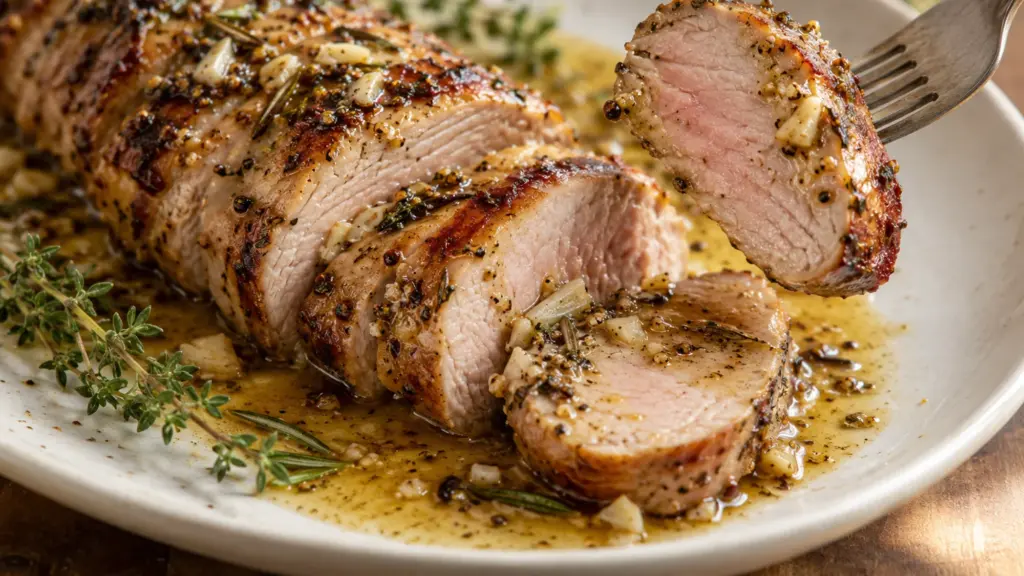
A good pork fillet marinade should make dinner smell inviting before you even slice the roast. Garlic and rosemary bring the savory backbone, Dijon helps the seasonings cling, and a little lemon lifts the richness. This version is designed for pork tenderloin, the slim, lean cut often sold as pork fillet, rather than a larger pork loin roast.
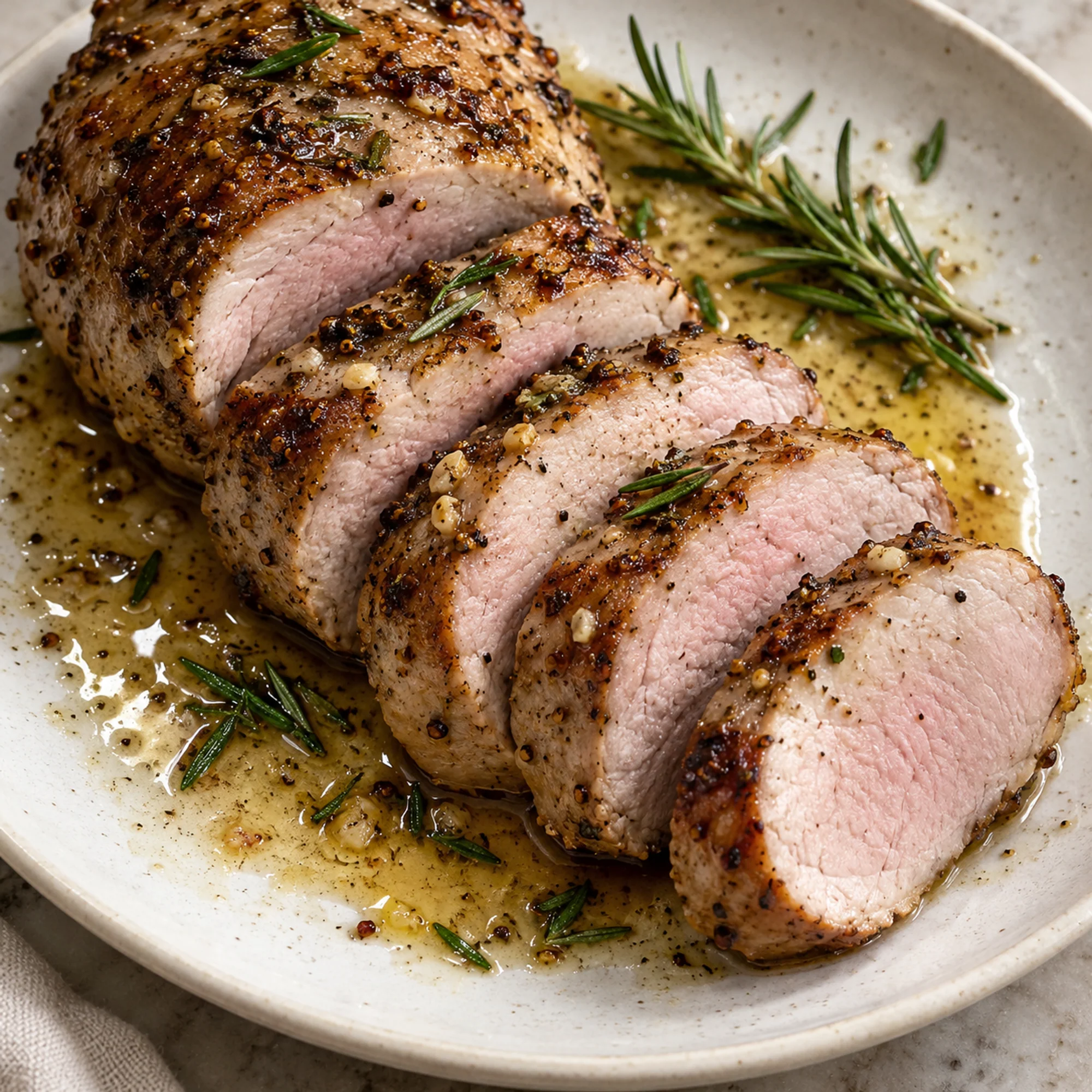
Whisk olive oil, Dijon, lemon, garlic, rosemary, salt, and pepper; marinate pork tenderloin in the refrigerator, then sear and roast until its center reaches 145°F (63°C). Rest it for at least three minutes before slicing.
Give the pork at least 30 minutes in the fridge to take on flavor; stop at four hours so the lemon does not make the exterior mushy. Pat it dry before searing. A dry surface takes on a golden edge. I prefer cooking the fillet whole for browned edges and tender slices.
Keep a thermometer close: its reading gives a far better answer than the clock or a guess based on color. The recipe card gives the amounts and timing; these cues help you judge the actual piece in your skillet.
Serving suggestions
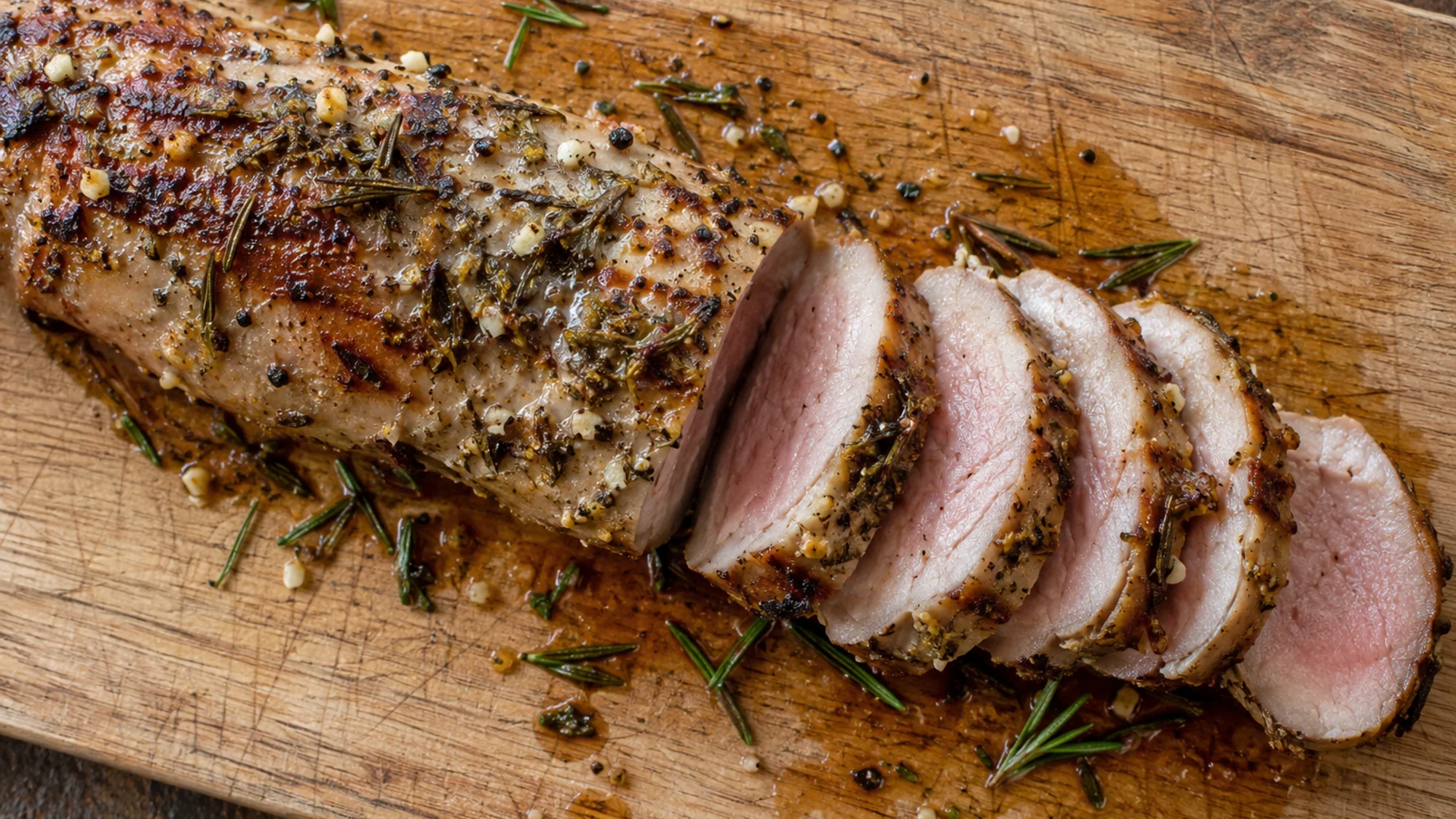
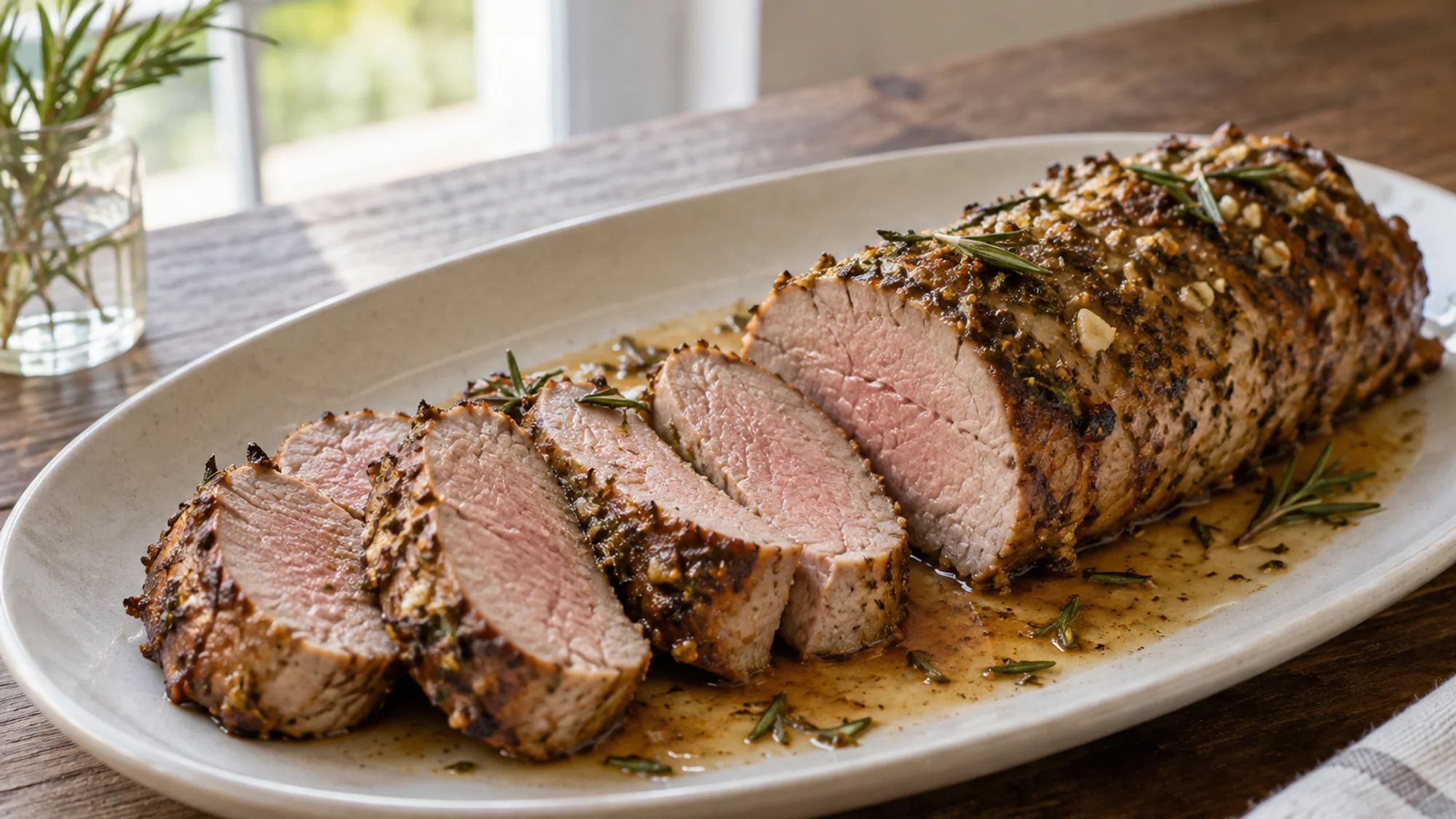
Slice the rested pork across the grain into thick medallions and spoon over any clean pan juices. For a simple plate, add roasted potatoes and a crisp green salad. The pork’s lemon and rosemary notes also sit nicely beside green beans or sautéed zucchini; neither needs a competing heavy sauce.
For a crowd, arrange slices on a warm platter. Set out an extra lemon wedge for anyone who likes a brighter finish, but taste a slice first so the citrus does not dominate the marinade. I would keep the side dishes gentle and let the browned garlic edge lead.
Leftovers make good mustard-and-greens sandwiches; refrigerate promptly and reheat gently. For another weeknight pairing, a small serving of stuffed pepper casserole turns the pork into part of a larger dinner.
Serve thick slices with a spoonful of pan juices and a bright vegetable side; keep extra lemon optional so the garlic and rosemary stay in balance.
Variations
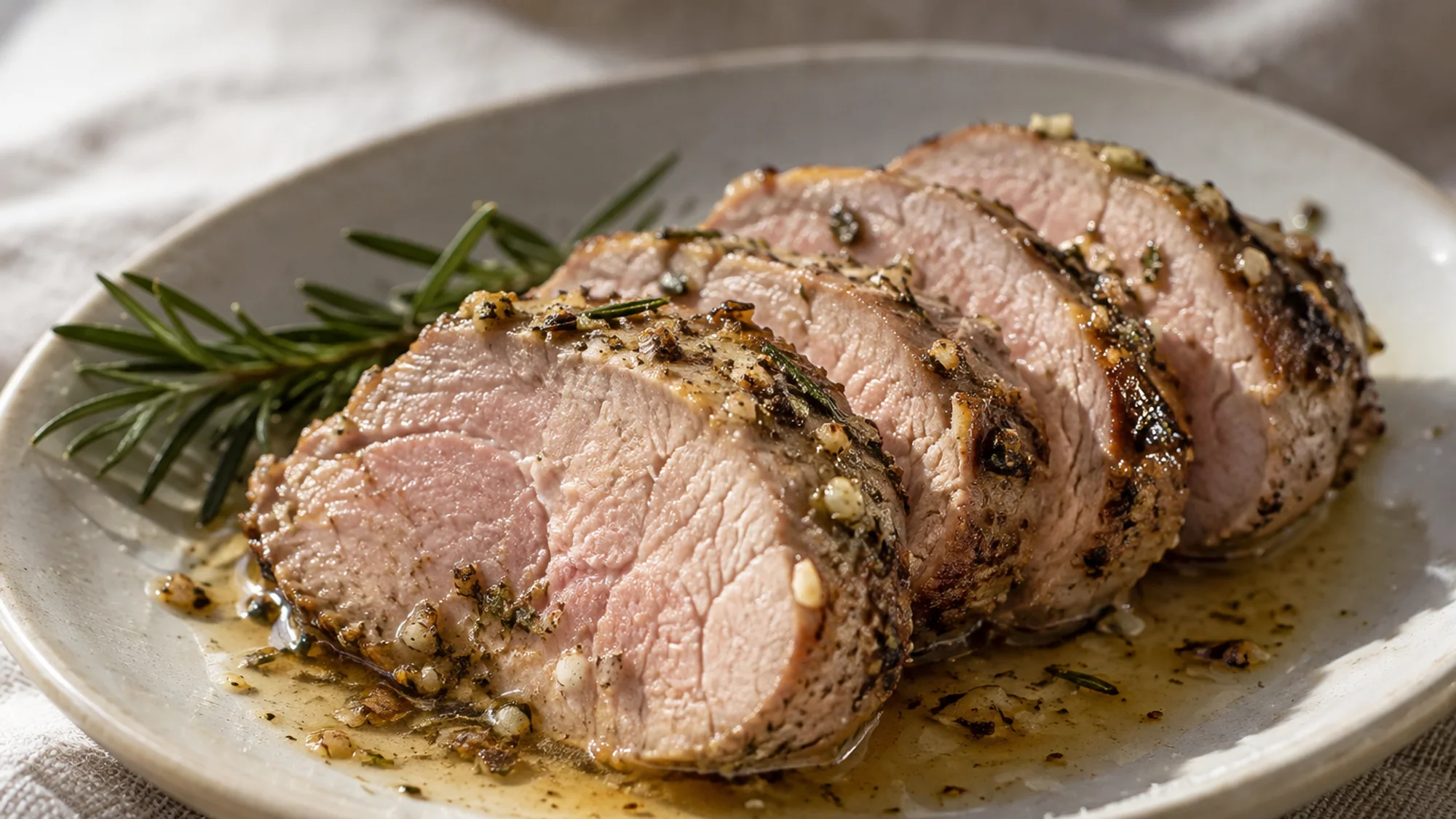
Swap rosemary for thyme if you prefer a softer herbal note, or add a pinch of smoked paprika for warmth. Keep the Dijon, oil, and modest lemon quantity; together they coat the meat without making the flavor sharply acidic.
For a honey-mustard direction, whisk in one teaspoon of honey. Watch the skillet: honey browns quickly. Orange zest is gentler than adding more lemon juice and still smells fresh.
Do not use marinade that has touched raw pork as a finishing sauce. If you want a glossy drizzle, reserve a small portion before adding the meat, or use only juices from the fully cooked roast. A larger pork loin needs a different cooking plan.
Change the herb or add a little honey, but keep the acid restrained and use a thermometer for the actual cut in your pan.
Health benefits
Pork tenderloin supplies protein and several B vitamins; the dish’s overall balance depends on what you serve with it. Lean meat can dry out when overcooked, so reaching the safe temperature and resting the roast protects both tenderness and your dinner plans. The marinade adds flavor without needing a creamy sauce.
Olive oil contributes fat, while Dijon and salt bring sodium. Nutrition figures are estimates because some marinade stays in the bag. If you watch sodium, use a smaller amount of salt and choose a lower-sodium mustard. Taste the cooked result before adding more at the table.
For this whole pork tenderloin, check the thickest part for 145°F (63°C) and allow at least a three-minute rest. Refrigerate the meat during marinating, keep raw juices away from ready-to-eat food, and wash the utensils and board that touched them.
The lean pork provides satisfying protein; thoughtful portions, vegetable sides, and safe handling are the most useful way to make this meal work for you.
A dinner worth slowing down for
When the fillet leaves the oven, resist cutting immediately. Three minutes is the food-safety rest, and a few extra minutes can make the slices easier to serve without losing their juices. Meanwhile, gather the sides and warm the plates.
This is a recipe I would choose when I want a proper roast without a long list of steps. The marinade gives you a clear plan, and the thermometer takes the uncertainty out of the finish. Slice, add the clean juices, and bring it to the table while the edges are still fragrant.
Pork Fillet Marinade Recipe
Pork Fillet Marinade Recipe

Ingredients
- 1 1/2 lb pork tenderloin also called pork fillet; trim silver skin
- 2 tablespoons olive oil for marinade
- 1 teaspoon olive oil for searing
- 1 tablespoon Dijon mustard
- 1 tablespoon fresh lemon juice
- 3 garlic cloves minced
- 1 tablespoon fresh rosemary finely chopped
- 1 teaspoon kosher salt
- 1/2 teaspoon freshly ground black pepper
Equipment
- Mixing bowl and whisk
- Resealable food-safe bag or covered dish
- Ovenproof skillet
- Instant-read food thermometer
Instructions
- Whisk 2 tablespoons olive oil, Dijon mustard, lemon juice, garlic, rosemary, salt and pepper in a bowl. Add pork and turn to coat. Cover and refrigerate for at least 30 minutes and no more than 4 hours.
- Heat oven to 425°F (220°C). Remove pork from marinade and pat the surface dry. Discard marinade that touched raw pork. Add 1 teaspoon olive oil to an ovenproof skillet over medium-high heat and sear pork about 2 minutes per side until golden; reduce heat if garlic starts to darken.
- Transfer skillet to oven and roast 12–18 minutes, checking the thickest part with a thermometer. Remove when the center reaches 145°F (63°C). The exact time depends on thickness.
- Rest the tenderloin at least 3 minutes before slicing across the grain. Spoon over clean juices from the cooked skillet and serve.
Nutrition
Notes
Tried this recipe?
Let us know how it turned out!Emily Parker is DISHORA’s recipe-writing persona, bringing a warm, practical voice to everyday cooking. Her focus is simple ingredients, comforting flavors and clear steps that make a dish feel approachable. From cozy dinners to something sweet, Emily’s recipes invite readers to try something delicious and make it their own.