
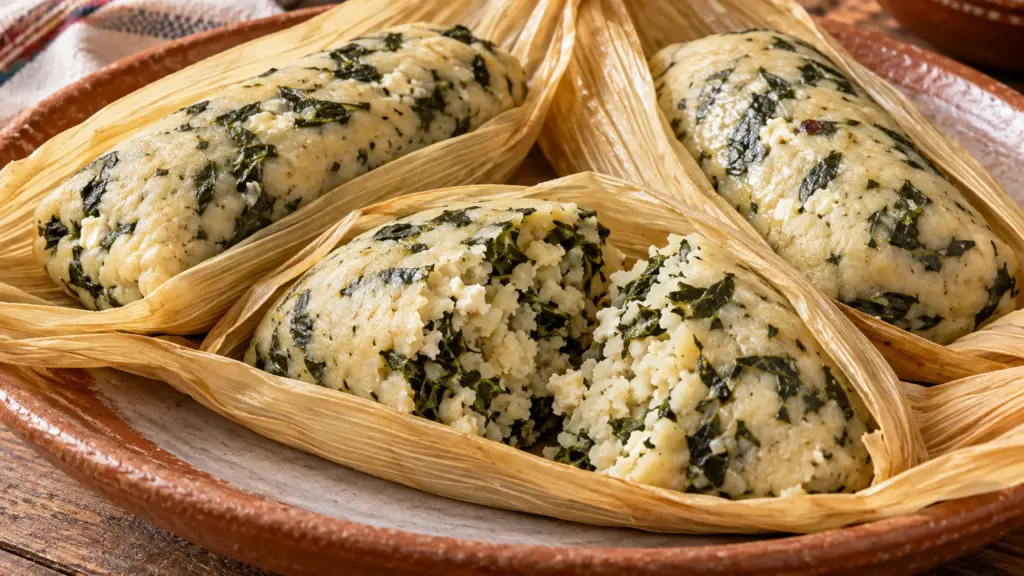
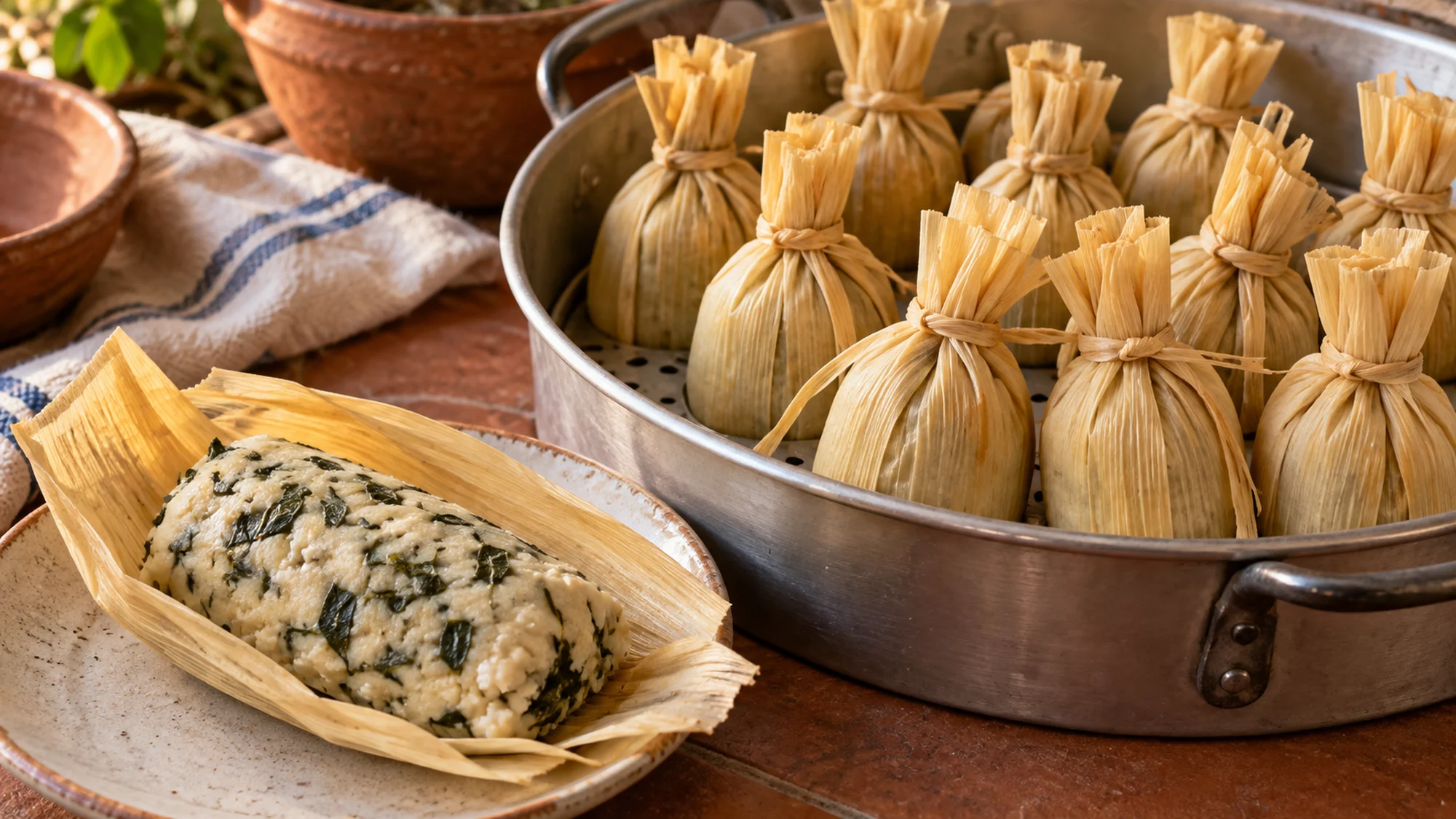
Peeling back a corn husk is much more satisfying when the tamal inside holds together. Chipilín tamales get their character from tender corn masa dotted with the herb’s small green leaves. This Guatemalan-style batch makes twelve little tamalitos, with crumbled queso fresco mixed into the dough and no separate filling to assemble.
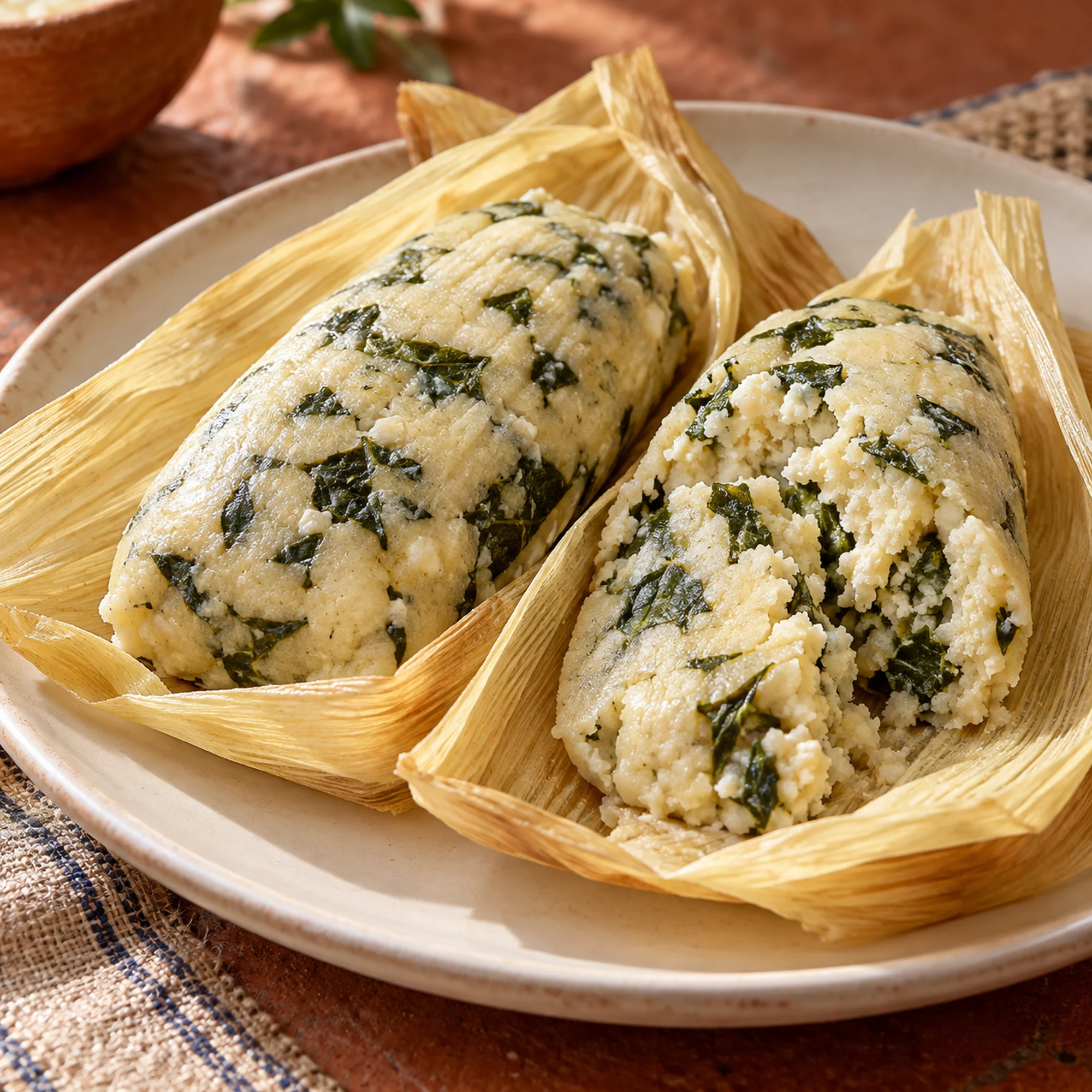
The practical secret is patience: start with soft, spreadable masa, leave room for steam to circulate, and rest the cooked tamales before unwrapping. A cleanly releasing husk matters more than a timer alone.
Chipilín has an earthy, leafy flavor that deserves some space. I’d keep the seasoning simple rather than bury it under bouillon. Look for culinary chipilín from a reputable Latin American grocer; the edible species is Crotalaria longirostrata. Buy identified leaves for cooking, never gather lookalike plants or use seeds.
Serving suggestions for chipilín tamales
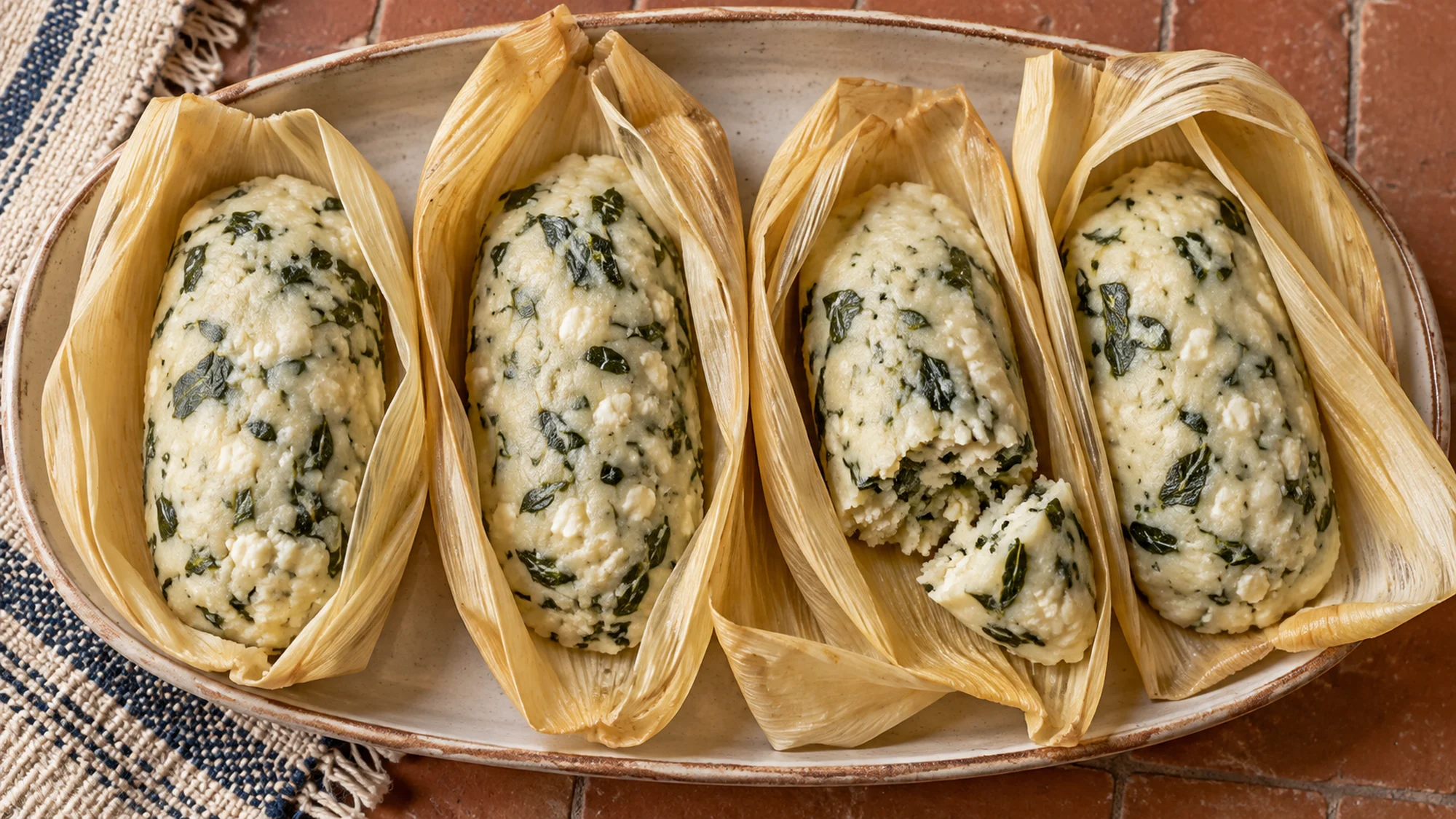
Serve these tamalitos warm, with the husks opened on the plate and a spoon for the tender masa. The wrappers are there for cooking and presentation, so peel them away before eating. One or two make a useful side; beans, vegetables or a bowl of soup can turn them into a meal.
- Keep toppings light: a spoonful of tomato salsa adds brightness without covering the leafy flavor. Crema is another option, but it adds richness to already tender masa.
- Pair with beans: black beans make a particularly comfortable companion. Serve them alongside rather than stuffing them into this dough, which keeps the wrapping straightforward.
- Build a soup supper: a tamalito beside brothy caldo de res offers a soft corn contrast to the vegetables and beef. It is a serving idea, not a claim that the dishes share the same regional origin.
I prefer a small bowl of salsa at the table. That lets everyone choose the balance while the first bite still tastes clearly of corn and chipilín.
Variations and ingredient choices
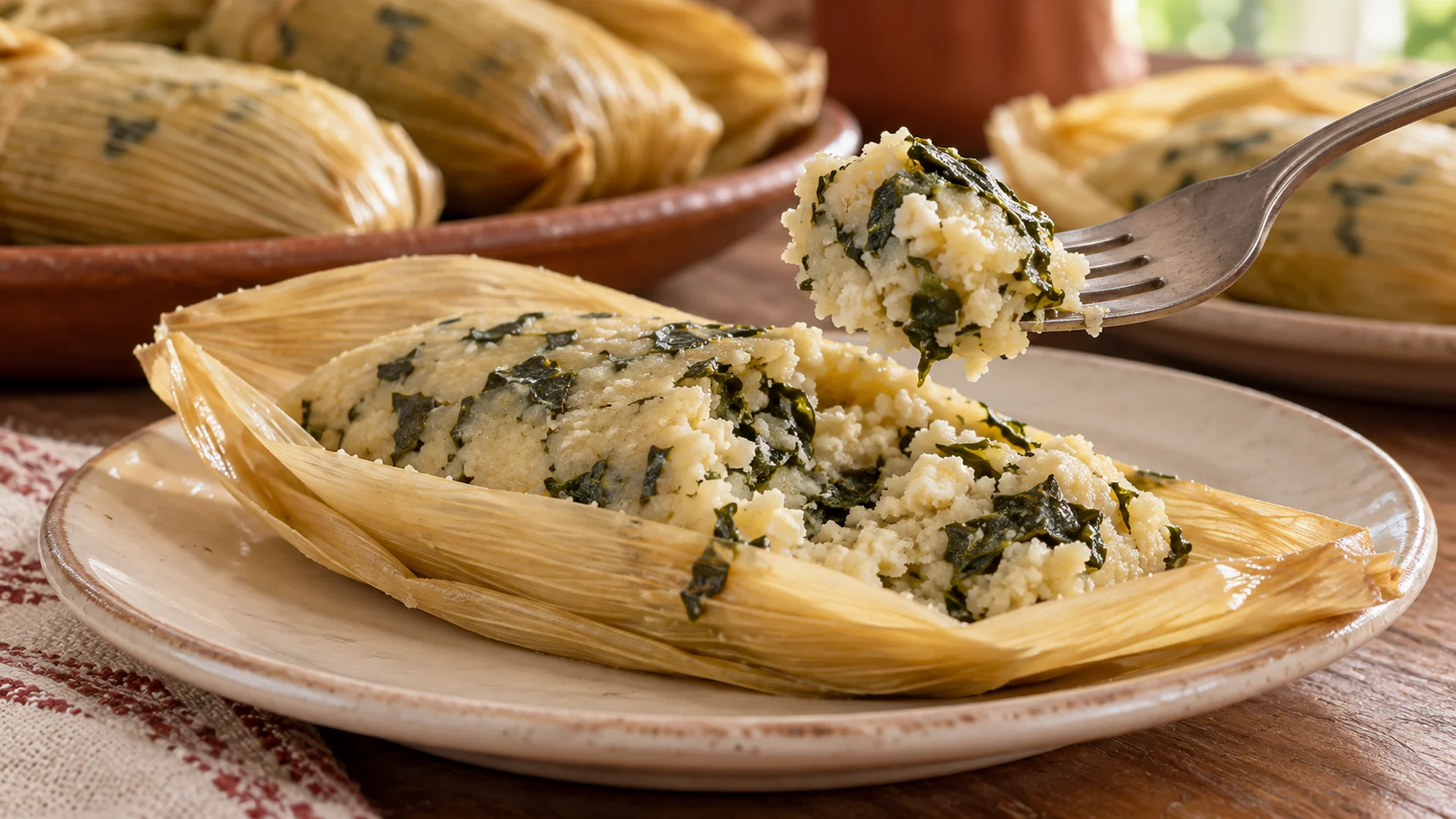
Household versions differ in fat, cheese and wrappers. This one uses dried corn husks and masa harina, the nixtamalized corn flour sold for tortillas and tamales. Plain cornmeal is a different product and will not hydrate into the same smooth dough. For a fresh-corn recipe instead, try tender uchepos.
- Fresh or frozen leaves: use the same 60 g of prepared chipilín. Thaw frozen leaves in the refrigerator and drain excess liquid; remove tough stems from fresh leaves. Packaged frozen chipilín is one shopping option where fresh bunches are unavailable.
- Choose a crumbly cheese: queso fresco made with pasteurized milk gives small milky pockets. It is mixed through the dough, not tucked inside as a stretchy filling.
- Adjust the water gradually: flour brands and drained leaves vary. The masa should spread with a spoon without cracking or running. Add only the small extra amount described in the card.
- For a meat-free adaptation, replace the lard with the same weight of vegetable shortening and check the cheese’s ingredients. Expect a different flavor; nutrition estimates will change.
Keep the first batch small and consistent. Similar-sized parcels cook more evenly, and a generous husk is far friendlier to fold than an overfilled one.
Health benefits and sensible portions
The corn masa contributes carbohydrate for energy and some fiber; the cheese adds a little protein. Chipilín supplies leafy flavor, but the modest amount in each tamal is not a reason to promise a major nutritional benefit. Lard and cheese also contribute saturated fat, so consider the rest of the meal.
- Treat the card’s nutrition as an estimate for one of twelve tamalitos, without salsa, crema or sides. Ingredient brands and parcel size change the numbers.
- Cook chipilín thoroughly and use only identified culinary leaves. Its seeds are toxic, and other Crotalaria species can be unsafe; this recipe is not a foraging guide.
- Safety during pregnancy and breastfeeding has not been established for chipilín. Ask your clinician before eating it during those stages.
A satisfying plate can include a tamalito, beans and vegetables without needing a superfood label. Enjoy the herb for its distinctive place in the dish.
Motivation conclusion
The first wrapped parcel may look less tidy than the twelfth. That is fine: a secure fold and enough steam matter more than perfect little packages. Set out the husks, dough and steamer before you begin, then give yourself an unhurried afternoon.
I’d save a few for another meal. Refrigerate promptly in shallow containers and use within three to four days; reheat until the centers reach 165°F. Keep the husks around them while steaming again, then unwrap for that soft, herb-flecked bite.
Chipilín Tamales Recipe

Ingredients
- 16 dried corn husks 12 broad wrappers plus about 4 extra for tying strips and lining; approximately 40 g, size varies; not eaten
- 2 cups masa harina 240 g; nixtamalized corn masa flour, not cornmeal
- 1 3/4 cups warm water 420 ml for the dough, plus up to 2 tablespoons if needed and additional water for soaking and steaming
- 1/4 cup lard 60 g; soft, not hot
- 60 g culinary chipilín leaves about 2 loosely packed cups; fresh, washed and tough stems removed, or frozen, thawed and drained; identified Crotalaria longirostrata leaves only
- 1/2 cup crumbled queso fresco 60 g; made with pasteurized milk
- 3/4 teaspoon fine salt about 4.5 g
Equipment
- 6-quart pot with lid and raised steamer basket Water must remain below the basket.
- Wide heatproof soaking dish For the corn husks.
- Large mixing bowl and sturdy spoon
- Measuring cups, spoons and kitchen scale
- Kitchen tongs
- Instant-read thermometer For reheating leftovers.
Instructions
- Rinse the corn husks, then cover with warm water in a wide heatproof dish. Soak for 30 minutes, until flexible. If they float, weight them with a small plate. Drain before wrapping; reserve 12 broad husks and tear the extras into tying strips and pieces for lining the steamer.
- While the husks soak, rinse fresh chipilín and strip away tough stems; drain well. If frozen, thaw in the refrigerator and drain. Beat the soft lard with a sturdy spoon for 2 minutes. Add the masa harina and salt, then work in 1 1/2 cups of the measured warm water. Knead or stir until smooth. Add the remaining 1/4 cup gradually to make a soft, spreadable dough.
- Fold the prepared leaves and crumbled queso fresco evenly through the masa. Rest 5 minutes. If the dough cracks when spread, add up to 2 extra tablespoons of water, 1 tablespoon at a time. It should hold a soft mound on a spoon rather than pour.
- Divide the dough evenly into 12 portions, approximately 70 g each. Place one portion on the smooth side of a wide husk, shaping a compact oblong and leaving space at the sides and narrow end. Fold the sides over the dough, then fold up the narrow end. Tie loosely with a softened husk strip, leaving the broad top open. Do not pack the dough tightly.
- Add water to the pot below the raised steamer basket, following your equipment’s fill limit. Line the basket with spare husk pieces. Stand the tamalitos open-end-up, with enough space for steam to circulate; cover. Bring the water to a boil, then maintain steady steam over medium-low heat for 60–75 minutes. Check the water level every 20 minutes and carefully add boiling water below the basket as needed; never let the pot boil dry.
- After 60 minutes, remove one tamalito with tongs and let it cool for 5 minutes before testing. The husk should peel away fairly cleanly and the center should be set, not wet paste. If needed, keep steaming in 10-minute increments. Once done, turn off the heat and rest the batch for 10 minutes with the lid ajar. Open the lid away from your face. Serve warm and remove the husks before eating.
Nutrition
Video
Notes
Tried this recipe?
Let us know how it turned out!Emily Parker is DISHORA’s recipe-writing persona, bringing a warm, practical voice to everyday cooking. Her focus is simple ingredients, comforting flavors and clear steps that make a dish feel approachable. From cozy dinners to something sweet, Emily’s recipes invite readers to try something delicious and make it their own.